


What are the characteristics of smart conveyor technology?
Conveyor belts that are capable of precise movement play an important role in manufacturing. For example, a part may need to be stopped in front of an image sensor for inspection or given to a robotic arm as part of a pick and place operation. Motion control systems can position parts accurately, quickly and repeatably.
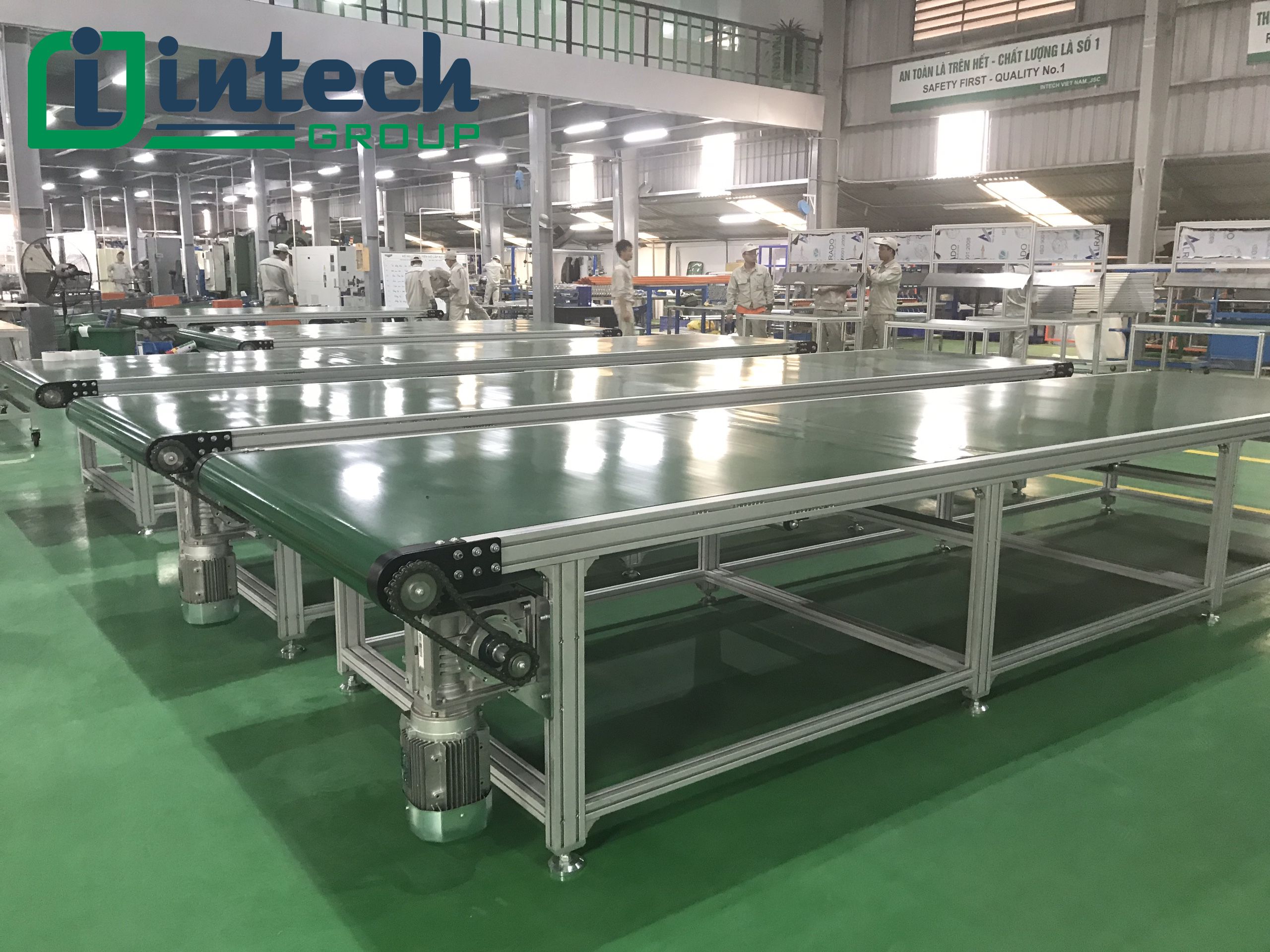
Conveyor belts are the work of industry. Modern conveyors can locate components with surprising speed and complexity. Options include short conveyor segments, direct drive, omnidirectional conveyors, and systems that automatically move individual carts around supported tracks. From production to packaging, from parcel handling to loading, conveyors get the job done with ease.
Conveyor belts that are capable of precise movement play an important role in manufacturing. For example, a part may need to be stopped in front of an image sensor for inspection or given to a robotic arm as part of a pick and place operation. Motion control systems can position parts accurately, quickly and repeatably.
While conventional closed-loop gear motors can provide the fast, precise movements required for industrial applications, they are not necessarily the optimal solution. The combination of motor, gearhead, coupling and feedback takes up a significant amount of space while adding cost, maintenance, and failure points. Direct drive motors provide an alternative.
In direct drive motors, the motor itself is part of the system. Instead of the motor shaft communicating with the conveyor's drive wheel through a coupling, the motor shaft is the drive wheel's shaft (see figure 1). The approach eliminates compliance while maximizing torque. It also supports a greater degree of design freedom, especially in the case of frameless direct drive motors
Frameless motors require more knowledge than versions available during the design and installation phase, but users can work with their supplier to streamline the process.
![]()
Conventional conveyor systems use long, complex structures to perform routine tasks such as sorting and stacking. Due to concerns about floor space and time, modern industrial organizations need more compact, economical and efficient positioning methods. An approach known as Active Roller Belt technology applies relatively simple moving components to innovative conveyors to quickly and reliably perform even delicate positioning.
The technology is based on a roller belt, a belt embedded with a series of freely rotating rollers mounted at an angle to the direction of travel. The product being transported will move on rollers. Actuators below the conveyor rotate the rollers, allowing the rollers to position the load in a local coordinate system even as it is moving within the belt's global coordinate system.
Components located on the conveyor can be quickly positioned linearly and in rotation, including diverting through a number of angles from 30° to 90°. When combined with machine vision sensors, this technology can be used to sort product lines with a system that is significantly simpler and more compact than conventional conveyor technology.
For more than a century, automation has meant developing a machine or production line to perform the same steps over and over. Equipment is expensive, but a long product lifecycle means that it has a long life after the company achieves its ROI. Today, the pattern has changed. Consumers want variety, which means manufacturers need automation and transportation solutions for them to meet. O
Smart conveyors, with motion control functions, provide a solution. These systems consist of individual trolleys and are routed asynchronously along routes. High-speed connectivity makes it possible to change programs in real time. The result is a highly responsive, efficient transport system for applications as diverse as assembly, packaging, laboratory services and even heavy industry.
Technology also benefits manufacturing. Stopping products on a conveyor belt normally requires stopping every product on the conveyor belt. As a result, the slowest process on the line affects the overall speed. The asynchronous operation of smart conveyors makes it possible for some to stand still while others are moving.
Leveraging technology requires redesign in the process. Manufacturers need to find a way to modularize tasks like clamping, cutting and gluing, and then use smart conveyors to link automation cells in the way that works best for a particular product, including including stop and start on demand.
Start and stop are not unique to smart conveyors. Direct-drive or even fixed-speed conveyors can be made into short sections to perform this type of variable motion. Determining which solution is most appropriate for the application can be nuanced. Certainly, adding more conveyor segments requires additional motors and actuators with the usual tradeoffs in cost, complexity, maintenance, and failure points.
Conveyors play an increasingly important role in our automation-based economy. Thanks to motion control, it is possible to choose from a variety of automated conveyors to find the one that best suits your application. From direct drive conveyors to smart conveyors, motion technology puts loads in the right places.
Related Posts:
Direct drive technology
Conveyor belts that are capable of precise movement play an important role in manufacturing. For example, a part may need to be stopped in front of an image sensor for inspection or given to a robotic arm as part of a pick and place operation. Motion control systems can position parts accurately, quickly and repeatably.
While conventional closed-loop gear motors can provide the fast, precise movements required for industrial applications, they are not necessarily the optimal solution. The combination of motor, gearhead, coupling and feedback takes up a significant amount of space while adding cost, maintenance, and failure points. Direct drive motors provide an alternative.
In direct drive motors, the motor itself is part of the system. Instead of the motor shaft communicating with the conveyor's drive wheel through a coupling, the motor shaft is the drive wheel's shaft (see figure 1). The approach eliminates compliance while maximizing torque. It also supports a greater degree of design freedom, especially in the case of frameless direct drive motors
Frameless motors require more knowledge than versions available during the design and installation phase, but users can work with their supplier to streamline the process.
How does smart conveyor work?
Conventional conveyor systems use long, complex structures to perform routine tasks such as sorting and stacking. Due to concerns about floor space and time, modern industrial organizations need more compact, economical and efficient positioning methods. An approach known as Active Roller Belt technology applies relatively simple moving components to innovative conveyors to quickly and reliably perform even delicate positioning.
The technology is based on a roller belt, a belt embedded with a series of freely rotating rollers mounted at an angle to the direction of travel. The product being transported will move on rollers. Actuators below the conveyor rotate the rollers, allowing the rollers to position the load in a local coordinate system even as it is moving within the belt's global coordinate system.
Components located on the conveyor can be quickly positioned linearly and in rotation, including diverting through a number of angles from 30° to 90°. When combined with machine vision sensors, this technology can be used to sort product lines with a system that is significantly simpler and more compact than conventional conveyor technology.
Smart conveyor technology
For more than a century, automation has meant developing a machine or production line to perform the same steps over and over. Equipment is expensive, but a long product lifecycle means that it has a long life after the company achieves its ROI. Today, the pattern has changed. Consumers want variety, which means manufacturers need automation and transportation solutions for them to meet. O
Smart conveyors, with motion control functions, provide a solution. These systems consist of individual trolleys and are routed asynchronously along routes. High-speed connectivity makes it possible to change programs in real time. The result is a highly responsive, efficient transport system for applications as diverse as assembly, packaging, laboratory services and even heavy industry.
Benefits of smart conveyor technology
Technology also benefits manufacturing. Stopping products on a conveyor belt normally requires stopping every product on the conveyor belt. As a result, the slowest process on the line affects the overall speed. The asynchronous operation of smart conveyors makes it possible for some to stand still while others are moving.
Leveraging technology requires redesign in the process. Manufacturers need to find a way to modularize tasks like clamping, cutting and gluing, and then use smart conveyors to link automation cells in the way that works best for a particular product, including including stop and start on demand.
Start and stop are not unique to smart conveyors. Direct-drive or even fixed-speed conveyors can be made into short sections to perform this type of variable motion. Determining which solution is most appropriate for the application can be nuanced. Certainly, adding more conveyor segments requires additional motors and actuators with the usual tradeoffs in cost, complexity, maintenance, and failure points.
Ending
Conveyors play an increasingly important role in our automation-based economy. Thanks to motion control, it is possible to choose from a variety of automated conveyors to find the one that best suits your application. From direct drive conveyors to smart conveyors, motion technology puts loads in the right places.
Related Posts:
Tags
tech news What are the characteristics of smart conveyor technology? what are the characteristics of smart conveyor technology
Những câu hỏi thường gặp


