


Conveyor Belt History: Who Invented the Conveyor Belt?
In our fast-paced, high-tech world filled with manufactured goods, it is difficult to imagine a world without conveyor systems. Manufacturers around the world rely on conveyors to facilitate the production process and keep things running smoothly.
But the question is: Who invented the conveyor belt? And when was the conveyor belt invented? Read on to learn about the history of the conveyor belt and how it came to be.
Who invented the conveyor belt?
If this industrial staple had only one inventor, sadly his name has been lost to time. However, many people throughout history can claim some responsibility for helping the conveyor belt develop and become more efficient.
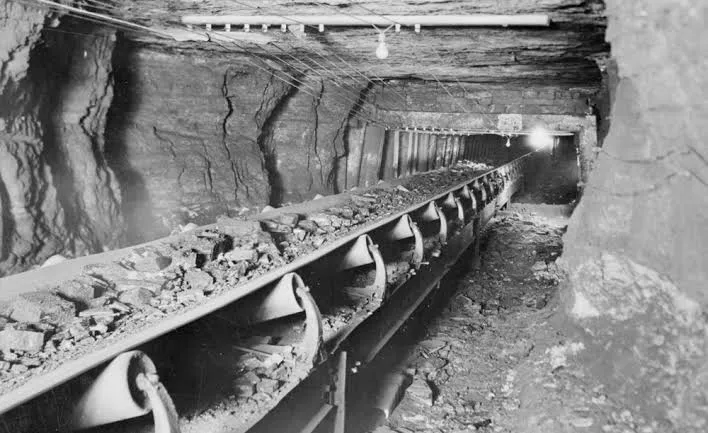
For example, the world has American manufacturer and inventor Thomas Robbins to thank for his conveyor belt system for transporting coal and ore for Thomas Edison’s Mining Company. His invention won the grand prize at the Paris World’s Fair and went on to revolutionize the mining industry.
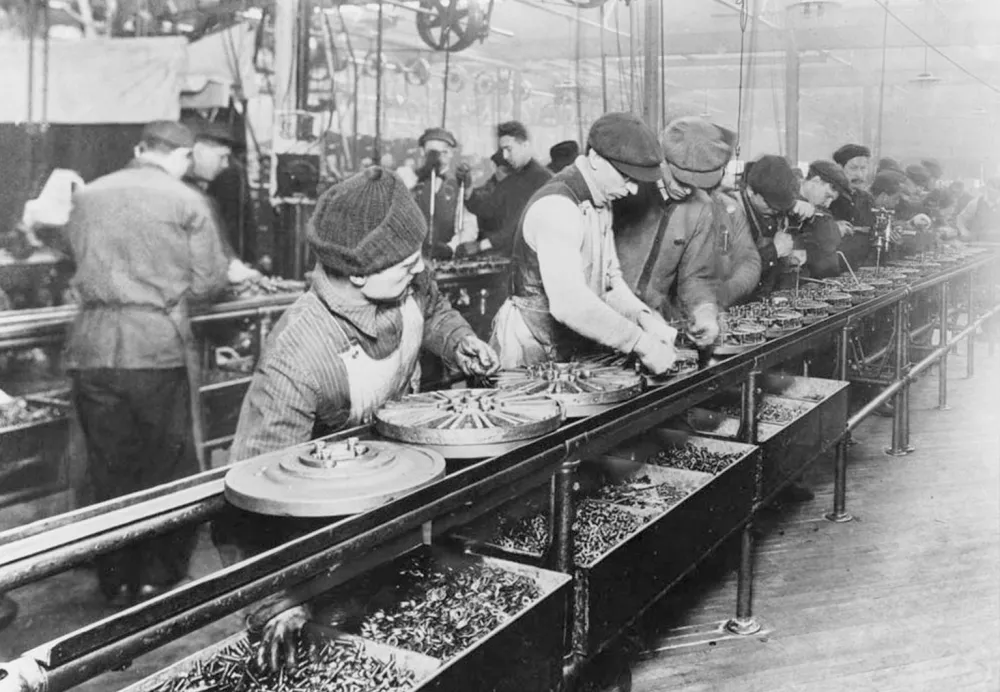
Another notable pioneer in the history of conveyor belts is none other than manufacturer Henry Ford. He introduced the idea of the conveyor assembly line to his Michigan factory and continually improved its technology. In doing so, Ford popularized the conveyor system and its popularity grew.
Timeline of the Conveyor System
When was the conveyor belt invented? Since the exact inventor of the conveyor belt is unknown, it is difficult to say for sure. However, long before Robbins and Ford, the first conveyor belt systems are believed to have been in use as early as 1795. They were made of leather or fabric straps that moved on a flat wooden bed. Years later, Robbins developed the direct predecessor of the modern conveyor belt in 1892, while Ford began using and improving it in 1913.
To help you better understand the monumental moments in the history of conveyor belts, we have created the following timeline:
- 1795 – The first conveyor belt appears. Conveyors were originally used primarily in ports to move agricultural products from shore to ship.
- 1804 – The British Navy began eating biscuits produced by the first steam-powered conveyor.
- 1892 – Manufacturer and inventor Thomas Robbins designed a conveyor system to transport coal and ore for Thomas Edison’s Ore Milling Company. His invention won the Grand Prize at the 1900 Paris World’s Fair.
- 1902 – Swedish engineering company Sandvik produced steel conveyors for
- transporting aggregate and mined coal.
- 1905 – Mining engineer and inventor Richard Sutcliffe introduced the first underground conveyor. It was made from cotton and rubber and was used in mining, quarrying, and mineral processing.
- 1908 – Inventor Hymle Goddard patented the first roller conveyor.
- 1913 – Automaker and inventor Henry Ford begins incorporating conveyor belts into his company’s assembly line systems.
- 1920s – Conveyor belts begin to replace locomotives and rails in the quarrying, mining, and mineral processing industries.
- 1940s – Due to a rubber shortage during World War II, the first synthetic belting material is created. Additionally, the first conveyor belt safety standards are developed by the American Standards Association in 1947
- 1970 – Manufacturers begin to create conveyor belts that are quieter and more durable.
- 1980 – Conveyor rollers and pulleys with internal motors are developed to eliminate costly maintenance
- 1988 – Span Tech is founded and the conveyor belt design system is introduced.
- Recent Years: From solar-powered conveyors to computerization, conveyor systems have become more efficient and high-tech than ever before.
The Evolution of Conveyors Today
With the advancement of technology in the 19th and 20th centuries, machines began to be used to move conveyors automatically. As industrialization gained momentum in the 19th century, conveyors became increasingly important in many industries. This innovation increased their durability and load-bearing capacity, paving the way for wider industrial applications. Conveyors continued to evolve with advances in technology.
The introduction of mechanized systems in the early 20th century further increased their capabilities and efficiency. Today, we see a wide range of specialized conveyors designed specifically for specific industries such as manufacturing, logistics, and food processing. From manual, labor-intensive operations to automated systems driven by robots and artificial intelligence (AI), conveyors have played a vital role in shaping modern industrial processes. The technology enables faster production cycles, reduces labor costs, improves safety standards, and facilitates seamless material handling at scale.
Conveyor Systems at Intech Group
As a leader in the conveyor industry, Intech Group develops unique, custom engineered solutions to handle applications across a wide range of industries. We have a history of developing our own conveyors. Since our launch in 2011, we have spent years continually evolving and innovating our processes to better support every business we support. No one knows who invented the conveyor, but everyone knows Intech Group's conveyor solutions are the best on the market.
As a company that thrives on innovation and experimentation, we know where conveyors have been, where they are, and where they are going. Whether you are looking for a specialty conveyor or want to learn more about the latest in manufacturing, Intech Group is here to help. Contact us for outstanding customer service, expert knowledge, and products you can trust.
- Hotline: 024 66 806 795
- Address: Lot 6, Lai Xa Industrial Park, Tay Tuu Ward, Hanoi Citytai.htm
Những câu hỏi thường gặp


