


Top 9 types of conveyor systems for your warehouse
Warehouse conveyors of different types are simply operated by gravity or electricity. It is a device that transports every item at any distance and space, helping to improve warehouse operational efficiency.
Conveyor systems are commonly used in many manufacturing facilities and warehouses. They are used to transport goods over different distances, helping to increase productivity and reduce human labor. Conveyor systems in warehouses can help transport heavy items easily and efficiently, avoiding errors during operation.
Warehouse conveyor systems are equipment for transporting light to heavy goods throughout the warehouse or delivery area. Warehouse conveyors of different types are simply operated by gravity or electricity. It is a device that transports every item at any distance and space, helping to improve the efficiency of warehouse operations.
Choosing the right warehouse conveyor system is essential because installing the wrong system can cost you a lot. With the wrong conveyor system, warehouse operations can be affected and even halted. Accidents can even happen if the conveyor system you choose is not suitable for the type of load you want to transport throughout your facility.
Here are the following factors you should consider before purchasing any conveyor system:
1 - Inventory
You should consider the details of the item in your warehouse before purchasing any warehouse conveyor system. Note how fragile items in your inventory are and check the conveyor system is capable of shipping items on time.
Also consider that you will be stocking different sized items in your warehouse. So it makes sense if you get a conveyor system that can accommodate different sized units.
2 - Warehouse throughput
Warehouse throughput is the number of units that are being processed and moved around the facility. If your throughput is high or you have to handle more items in stock on a daily basis, you need a conveyor that can transport several units quickly. You should also check that the warehouse conveyor system is effective in transporting multiple items without compromising the integrity of each unit.
3 - Long term goals
Long-term goals should also go into the process of choosing a warehouse conveyor system. Any company that wants to stay profitable will eventually want to expand.
If you want your business to expand and attract more customers, you should choose the right warehouse conveyor system for your growing needs. Check conveyor belts can be adjusted to accommodate more units or heavier loads.
There are different types of warehouse conveyor systems for a wide variety of items. The type of conveyor a warehouse manager needs will depend on the nature of the product they will be storing in their facility.
1 - Belt Conveyor
Belt conveyors are the most commonly used conveyor belts for transporting goods in warehouses. Conveyor belts using PU, PVC, rubber belts can transport all items of different shapes and sizes.
![Băng tải dây đai]()
2 - Roller Conveyor
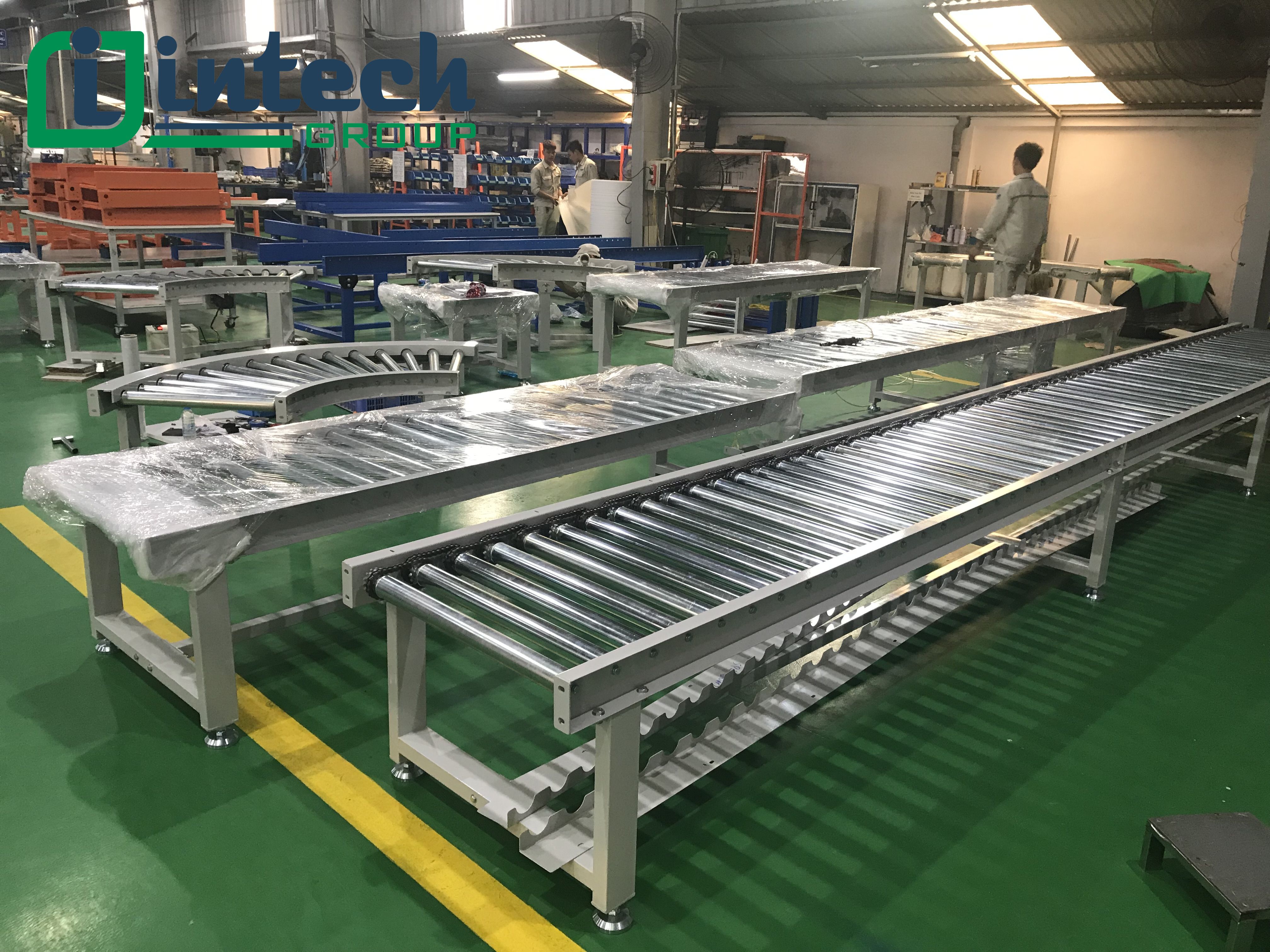
Roller conveyors are often used in warehouses to make the movement of goods easier. With good bearing capacity, the roller conveyor can easily load heavy pallets. Gravity or electric powered conveyors with rigid flat bottoms. For gravity roller conveyors, the conveyor is usually designed with a certain inclination so that gravity pulls the items in the warehouse to a lower point. You can learn more about plastic roller conveyor, stainless steel roller conveyor, stacker roller conveyor.
![Băng tải con lăn]()
3 - Ball Bearing Conveyor
Ball conveyor belt is a group of rotating steel balls. These conveyors are commonly used to pack items that need to be moved in multiple directions.
![Băng tải bi cầu]()
4 - Overhead Conveyor
An overhead conveyor is a single rail system that is attached to the ceiling. This conveyor is suitable if the warehouse has limited floor space or bulk storage area.
![Băng tải trên cao]()
5 - Pneumatic Conveyor
This is a shipping system that uses air freight to transport items from one point to another. Pneumatic conveyors are useful in transporting dry goods such as cement, flour, pellets, sand.
![Băng tải khí nén]()
6 - Bucket Conveyor
Bucket conveyors use metal buckets to carry items that cannot be loaded onto flat surfaces. Typically, bucket conveyors are used to carry sand, gravel and liquids to other facility areas.
![Băng tải gầu]()
7 - Slide conveyor
Sliding conveyors are the simplest and cheapest form of conveying system in the warehouse industry. It is an inclined chute to transfer items from higher floors to lower floors using gravity. This type of conveyor is cheap and easy to use.
![Băng tải máng trượt]()
8 - Magnetic Conveyor
Magnetic conveyors are magnets that are attached to fixed plates. They carry magnetic materials, mainly metals. These conveyors are suitable for transporting metal items that cannot be packed in transit.
![Băng tải từ tính]()
9 - Vertical Conveyor
Vertical conveyors are elevators that transport items in a warehouse from one floor to another. These warehouse conveyor systems are suitable for transporting items up and down a facility.
![Băng tải đứng]()
Conveyor types are designed in accordance with the conveying requirements of the material and the operating environment to achieve the highest efficiency. Consider the items in your storage facility to choose the right conveyor. Using the right type of warehouse conveyor will help reduce human labor, reduce risk, and increase the productivity of your warehouse. Choose carefully to get the best conveyor efficiency.
Related Posts:
What is warehouse conveyor system?
Warehouse conveyor systems are equipment for transporting light to heavy goods throughout the warehouse or delivery area. Warehouse conveyors of different types are simply operated by gravity or electricity. It is a device that transports every item at any distance and space, helping to improve the efficiency of warehouse operations.
Necessary notes when choosing a warehouse conveyor system
Choosing the right warehouse conveyor system is essential because installing the wrong system can cost you a lot. With the wrong conveyor system, warehouse operations can be affected and even halted. Accidents can even happen if the conveyor system you choose is not suitable for the type of load you want to transport throughout your facility.
Here are the following factors you should consider before purchasing any conveyor system:
1 - Inventory
You should consider the details of the item in your warehouse before purchasing any warehouse conveyor system. Note how fragile items in your inventory are and check the conveyor system is capable of shipping items on time.
Also consider that you will be stocking different sized items in your warehouse. So it makes sense if you get a conveyor system that can accommodate different sized units.
2 - Warehouse throughput
Warehouse throughput is the number of units that are being processed and moved around the facility. If your throughput is high or you have to handle more items in stock on a daily basis, you need a conveyor that can transport several units quickly. You should also check that the warehouse conveyor system is effective in transporting multiple items without compromising the integrity of each unit.
3 - Long term goals
Long-term goals should also go into the process of choosing a warehouse conveyor system. Any company that wants to stay profitable will eventually want to expand.
If you want your business to expand and attract more customers, you should choose the right warehouse conveyor system for your growing needs. Check conveyor belts can be adjusted to accommodate more units or heavier loads.
Top 9 commonly used warehouse conveyor systems
There are different types of warehouse conveyor systems for a wide variety of items. The type of conveyor a warehouse manager needs will depend on the nature of the product they will be storing in their facility.
1 - Belt Conveyor
Belt conveyors are the most commonly used conveyor belts for transporting goods in warehouses. Conveyor belts using PU, PVC, rubber belts can transport all items of different shapes and sizes.

2 - Roller Conveyor
Roller conveyors are often used in warehouses to make the movement of goods easier. With good bearing capacity, the roller conveyor can easily load heavy pallets. Gravity or electric powered conveyors with rigid flat bottoms. For gravity roller conveyors, the conveyor is usually designed with a certain inclination so that gravity pulls the items in the warehouse to a lower point. You can learn more about plastic roller conveyor, stainless steel roller conveyor, stacker roller conveyor.
3 - Ball Bearing Conveyor
Ball conveyor belt is a group of rotating steel balls. These conveyors are commonly used to pack items that need to be moved in multiple directions.

4 - Overhead Conveyor
An overhead conveyor is a single rail system that is attached to the ceiling. This conveyor is suitable if the warehouse has limited floor space or bulk storage area.
.jpg)
5 - Pneumatic Conveyor
This is a shipping system that uses air freight to transport items from one point to another. Pneumatic conveyors are useful in transporting dry goods such as cement, flour, pellets, sand.

6 - Bucket Conveyor
Bucket conveyors use metal buckets to carry items that cannot be loaded onto flat surfaces. Typically, bucket conveyors are used to carry sand, gravel and liquids to other facility areas.

7 - Slide conveyor
Sliding conveyors are the simplest and cheapest form of conveying system in the warehouse industry. It is an inclined chute to transfer items from higher floors to lower floors using gravity. This type of conveyor is cheap and easy to use.

8 - Magnetic Conveyor
Magnetic conveyors are magnets that are attached to fixed plates. They carry magnetic materials, mainly metals. These conveyors are suitable for transporting metal items that cannot be packed in transit.
.png)
Vertical conveyors are elevators that transport items in a warehouse from one floor to another. These warehouse conveyor systems are suitable for transporting items up and down a facility.

Epilogue
Conveyor types are designed in accordance with the conveying requirements of the material and the operating environment to achieve the highest efficiency. Consider the items in your storage facility to choose the right conveyor. Using the right type of warehouse conveyor will help reduce human labor, reduce risk, and increase the productivity of your warehouse. Choose carefully to get the best conveyor efficiency.
Related Posts:
- Important Features for Mining Conveyor Systems
- What is Agricultural Conveyor?
- Types of conveyor rollers to suit your application
Tags
tech news Top 9 loại hệ thống băng tải cho nhà kho của bạn top 9 loai he thong bang tai cho nha kho cua ban
Những câu hỏi thường gặp


