


What is Pneumatic Conveyor?
Pneumatic conveyors are used to transfer dry bulk or powdered materials through a closed conveying pipeline using differential pressure and air flow.
Conveyor systems are popular in many industries because they provide a cost effective and reduced material loss means of handling bulk materials. Many forms of conveying systems exist, which are tailored to the needs of a particular industry. Pneumatic conveyor systems can be used for various types of granules, from small size particles to pellets, practical for use in the fields of construction and technology industries.
Pneumatic conveyors are used to transfer dry bulk or powdered materials through a closed conveying pipeline using differential pressure and the flow of gas (usually air), generated by an air movement device. as a fan, blower or compressor.
Pneumatic conveying offers a cost-effective method of safely moving materials with little damage or loss. It is suitable for a wide range of processing industries such as: Food and Beverages , Pet Food , Chemicals and Detergents , Renewable Materials and Specialized Materials.

Pneumatic conveying system transfers bulk materials through pipelines. Common system components are the material entry point, piping, receiving point, and air flow device, but the specific nature and capacity of the system varies between models.
The flexibility of the pipes of a pneumatic conveying system allows them to be installed in existing spaces, as they can be routed around the unit. Well-designed pneumatic conveyor systems are an economical, practical means of transporting materials from point A to point B, proving to be more efficient than alternative mechanical systems.
The pneumatic system is an industrial conveyor system that can run vertically or horizontally over long distances and protects against the emission of dust into the atmosphere. Reduced maintenance, equipment and operating costs compared to mechanical conveyor systems.
Airflows, pressure or vacuum are used to move materials and there are three main types of pneumatic conveying methods that are functionally related and suitable for a particular air velocity, pressure, and ratio. with products in the system: dilution, dense phase and air conveyance.
Dilution transport is a continuous, high-speed, low-pressure process and has a high air-to-product ratio. This process is easily accomplished by pushing or pulling materials suspended in the air through the velocity of the gas. The system can be designed as a positive pressure system, a vacuum system (negative pressure system) or a combination of both.
Due to the compact nature of the pipeline conveying line, pneumatic conveying systems can be routed around existing equipment, providing more flexibility than mechanical conveying systems.
- Can run vertically or horizontally over a long distance.
When the system is enclosed, there is protection against the emission of dust into the atmosphere and also protection of the material being transported from external contaminants.
- Pneumatic conveying systems are easier to maintain and more cost effective than mechanical conveying systems - fewer moving parts.
- Ability to maintain a controlled atmosphere around the material.
- Minimize system wear
- Takes up less floor space so it's easier to locate.
Pneumatic conveying is a safe and effective method of transporting materials and is used in many industries. When exploring compressed air systems, as a method of transportation, there are factors that must be considered. Equipment and methods of transportation must be appropriate for the material being transported. Here are some guiding points to consider when choosing a pneumatic conveyor conveying system.
1 - Material characteristics
The first consideration when choosing a conveying system is the type of material to be handled. Mass density is the first consideration as it determines the vacuum receiver and the air source.
2 - System size
It is important to understand if the system will be able to handle vertical or horizontal spacing. The size of the system should leave room for maintenance and monitoring. Other factors include the number of pickup points and the size of the receiving bin.
3 - Vacuum and pressure
The vacuum system draws material through the pipeline and is ideal for pressure sensitive non-abrasive materials. A pressure system pushes the material through the pipe and can move the abrasive. Quartz and copper sulphate are abrasive materials that a pressure system will move.
4 - Dilution versus solid phase
Dilution moves material at great velocity under pressure and there is some breakage during transportation. The solid phase is used for fragile materials because it operates at low pressures. Dilution has a high air-to-product ratio, while thickening has a low ratio.
Conveying systems use compressed air, or gas, to move bulk materials, such as powders and granules, from one processing center to another. Positive or negative pressure in the pneumatic conveying line moves material safely with little damage or loss. Pneumatic conveyor systems use pipes or ducts to transport materials over an air stream. Pneumatic conveyors are widely used because of their efficiency, cost savings and flexibility.
What is Pneumatic Conveyor?
Pneumatic conveyors are used to transfer dry bulk or powdered materials through a closed conveying pipeline using differential pressure and the flow of gas (usually air), generated by an air movement device. as a fan, blower or compressor.
Pneumatic conveying offers a cost-effective method of safely moving materials with little damage or loss. It is suitable for a wide range of processing industries such as: Food and Beverages , Pet Food , Chemicals and Detergents , Renewable Materials and Specialized Materials.
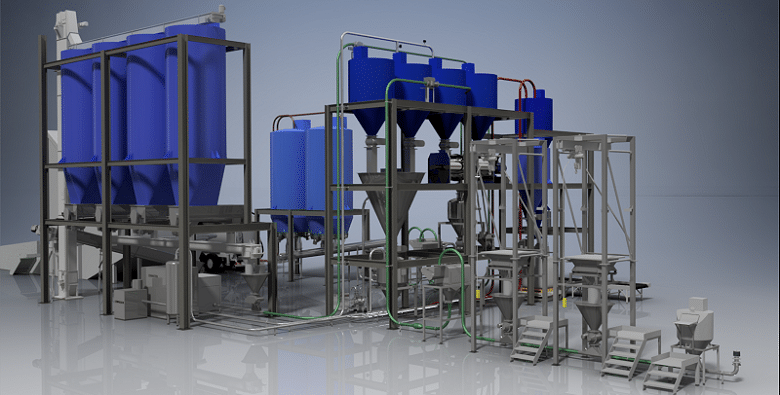
System structure and function of pneumatic conveyor
Pneumatic conveying system transfers bulk materials through pipelines. Common system components are the material entry point, piping, receiving point, and air flow device, but the specific nature and capacity of the system varies between models.
The flexibility of the pipes of a pneumatic conveying system allows them to be installed in existing spaces, as they can be routed around the unit. Well-designed pneumatic conveyor systems are an economical, practical means of transporting materials from point A to point B, proving to be more efficient than alternative mechanical systems.
The pneumatic system is an industrial conveyor system that can run vertically or horizontally over long distances and protects against the emission of dust into the atmosphere. Reduced maintenance, equipment and operating costs compared to mechanical conveyor systems.
Transport method by pneumatic conveyor
Airflows, pressure or vacuum are used to move materials and there are three main types of pneumatic conveying methods that are functionally related and suitable for a particular air velocity, pressure, and ratio. with products in the system: dilution, dense phase and air conveyance.
Dilution transport is a continuous, high-speed, low-pressure process and has a high air-to-product ratio. This process is easily accomplished by pushing or pulling materials suspended in the air through the velocity of the gas. The system can be designed as a positive pressure system, a vacuum system (negative pressure system) or a combination of both.
Advantages of pneumatic conveyor
Due to the compact nature of the pipeline conveying line, pneumatic conveying systems can be routed around existing equipment, providing more flexibility than mechanical conveying systems.
- Can run vertically or horizontally over a long distance.
When the system is enclosed, there is protection against the emission of dust into the atmosphere and also protection of the material being transported from external contaminants.
- Pneumatic conveying systems are easier to maintain and more cost effective than mechanical conveying systems - fewer moving parts.
- Ability to maintain a controlled atmosphere around the material.
- Minimize system wear
- Takes up less floor space so it's easier to locate.
Choose a pneumatic conveyor system
Pneumatic conveying is a safe and effective method of transporting materials and is used in many industries. When exploring compressed air systems, as a method of transportation, there are factors that must be considered. Equipment and methods of transportation must be appropriate for the material being transported. Here are some guiding points to consider when choosing a pneumatic conveyor conveying system.
1 - Material characteristics
The first consideration when choosing a conveying system is the type of material to be handled. Mass density is the first consideration as it determines the vacuum receiver and the air source.
2 - System size
It is important to understand if the system will be able to handle vertical or horizontal spacing. The size of the system should leave room for maintenance and monitoring. Other factors include the number of pickup points and the size of the receiving bin.
3 - Vacuum and pressure
The vacuum system draws material through the pipeline and is ideal for pressure sensitive non-abrasive materials. A pressure system pushes the material through the pipe and can move the abrasive. Quartz and copper sulphate are abrasive materials that a pressure system will move.
4 - Dilution versus solid phase
Dilution moves material at great velocity under pressure and there is some breakage during transportation. The solid phase is used for fragile materials because it operates at low pressures. Dilution has a high air-to-product ratio, while thickening has a low ratio.
Ending
Conveying systems use compressed air, or gas, to move bulk materials, such as powders and granules, from one processing center to another. Positive or negative pressure in the pneumatic conveying line moves material safely with little damage or loss. Pneumatic conveyor systems use pipes or ducts to transport materials over an air stream. Pneumatic conveyors are widely used because of their efficiency, cost savings and flexibility.
Những câu hỏi thường gặp


