


What is Automation? Types of Benefits and Applications
Automation is the use of machines or technology to perform tasks without much human intervention. It attempts to streamline processes, increase efficiency, and reduce human error.
What is automation?
Automation, powered by robots and artificial intelligence, is changing the way we live and work. From modern manufacturing lines to the smartphones in our hands, automation is here. Automation allows us to produce higher quality products at lower costs, while freeing humans from repetitive tasks to focus on more creative work. However, automation also poses new challenges, such as employment and cybersecurity. Therefore, we need to be prepared to face these changes.

Automation Market
The automation market is at the forefront of a transformative technological revolution that is redefining industries across the globe. Embracing innovations in robotics, artificial intelligence, and connected systems, this market represents a significant shift towards enhanced efficiency and optimization across various sectors.
Let’s take a look at recent statistics that illustrate the current automation landscape.
- Industry Adoption:
Automation has emerged as a cornerstone in various industries, such as manufacturing, healthcare, finance, and retail. In manufacturing, the combination of robotics and AI is revolutionizing processes, leading to profound optimization. These advanced technologies not only streamline operations but also enhance productivity and improve accuracy. The expanding scope of automation across these various sectors demonstrates its adaptability and significant contribution to driving efficiency and driving innovative advancements.
- Impact on employment:
The deployment of automation is expected to significantly change the employment landscape. A 2020 report by the World Economic Forum found that by 2030, approximately 85 million jobs could be displaced or replaced by automation. However, this technological advancement is also forecast to create approximately 97 million new job opportunities across a variety of sectors. This predicted employment shift represents a dynamic shift in the employment landscape, requiring retraining and adaptation to changing job requirements.
- Technology Integration:
Automation is evolving by integrating advanced technologies such as AI, machine learning, and IoT. Smart factories are at the forefront of this integration, using interconnected systems to optimize operations and enable predictive maintenance. The combination of these technologies represents a shift towards more intelligent and responsive systems, improving efficiency and reliability.
- Robotic Process Automation (RPA):
The need to automate repetitive tasks is driving the RPA market. This growing demand underscores the clear trend towards adopting robotic solutions to streamline and improve various operational processes, especially those that require repetitive and routine tasks.
- Economic Impact:
The integration and proliferation of automation technologies is likely to contribute significantly to the global GDP. This economic impact underscores the role of automation in driving economic growth and improving productivity on a global scale.
- Consumer-Driven Automation:
Automation is shaping the consumer experience across the retail, financial, and service industries. Innovations such as chatbots, cashierless stores, and automated customer service solutions are gaining traction. These advances aim to improve convenience and customer satisfaction, illustrating how automation not only optimizes operations but also enhances customer interactions and experiences.
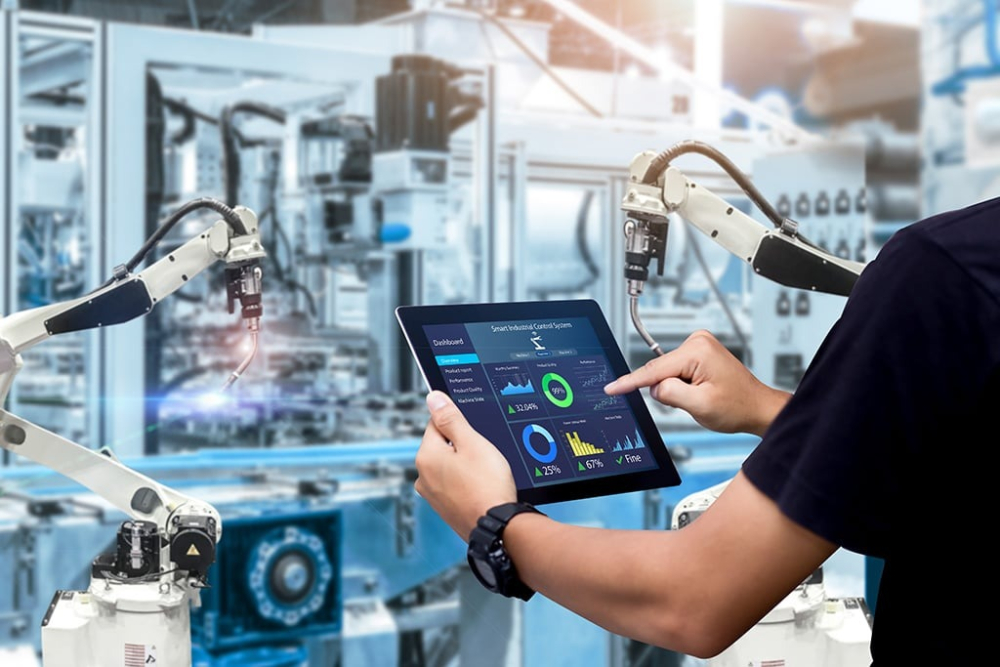
Types of Automation
Automation takes many forms across many industries, all with the goal of improving processes, increasing efficiency, and reducing the need for human involvement.
Here are some of the main types of automation:
1. Robotic Process Automation (RPA)
Robotic process automation involves using software robots, or ‘bots’, to automate repetitive, rule-based tasks that humans typically perform. These bots mimic human actions by interacting with digital systems and performing tasks such as data entry, form filling, and data extraction. For example, in finance, RPA is used to automate invoice processing, reduce errors, and speed up workflows.
2. Industrial Automation
This includes automation in manufacturing and industrial settings. It involves the use of machines, control systems, and robots to perform tasks such as assembly, packaging, and quality control. Automotive assembly lines use industrial robots for precise and efficient assembly processes.
3. Cognitive Automation
Cognitive automation integrates AI and machine learning to perform complex tasks that require cognitive capabilities. This form of automation enables systems to analyze unstructured data, make decisions, and learn from patterns.
4. Business Process Automation (BPA)
BPA focuses on automating entire business processes that involve multiple tasks and departments of an organization. It aims to optimize workflows, reduce manual effort, and improve efficiency.
5. IT Process Automation (ITPA)
TPA automates routine IT tasks such as system monitoring, software deployment, and troubleshooting. It helps maintain IT infrastructure and ensure smooth operations. 6. Home Automation
This type of automation involves integrating smart devices and systems into a household to automate tasks such as temperature control, lighting, security, and entertainment systems. Smart home devices like Amazon Alexa, Google Home, and Nest smart thermostats automate home functions, providing convenience and energy savings.
7. Retail Automation
Retail automation includes cashierless stores, inventory management systems, and personalized marketing through AI-driven algorithms. Amazon Go stores use computer vision and sensors to create a cashierless shopping experience where customers can pick up their items and leave without going through the checkout process.
8. Automated Systems
This form of automation involves creating systems that are capable of operating without constant human intervention. Autonomous vehicles, drones, and smart devices fall into this category. These variations of automation demonstrate the impact of technology on many different sectors, refining operations and leading advances in many aspects of life and industry.
Applications of automation
Automation extends its reach across many industries and applications, transforming processes and improving efficiency. Here are some of the different use cases of automation across different sectors, with recent examples:
1. Manufacturing and robotics
In manufacturing, automation revolutionizes production processes, improving precision and maximizing resource efficiency. Collaborative robots, or cobots, work alongside humans in factories, assisting with tasks such as heavy lifting and complex assembly processes.
2. Healthcare and Medicine
Automation in healthcare supports diagnosis, treatment, and patient care. Robotic surgical systems, such as the da Vinci Surgical System, assist surgeons in performing precise, minimally invasive procedures. Additionally, AI-enabled diagnostic tools such as radiology platforms analyze medical images to identify abnormalities efficiently, assisting radiologists in making accurate diagnoses.
3. Retail and E-commerce
E-commerce giants like Amazon integrate automation into their warehouses. Amazon’s robotic fulfillment centers use autonomous robots to move inventory, optimize storage, and expedite order fulfillment. In-store automated checkout systems, leveraging computer vision and sensors for cashierless transactions, enhance customer convenience.
4. Finance and Banking
Financial institutions rely on automation for a variety of tasks, from customer service chatbots to risk management. RPA streamlines back-office operations, improving efficiency in tasks like data entry and compliance.
5. Transportation and Logistics
Automation is already transforming transportation and logistics with advances in autonomous vehicles and drones. DHL and FedEx are testing drone delivery systems for faster, more efficient last-mile deliveries.
6. Energy and Utilities
Smart grids use automation to optimize energy distribution and consumption. Companies like Siemens provide automation solutions for power plants, using predictive maintenance to prevent downtime and increase reliability. Additionally, automated systems in smart homes and buildings manage energy usage, optimizing efficiency and reducing costs.
7. Customer Service and AI Chatbots
AI-powered chatbots automate customer service across a variety of industries. Companies like Google, with Duplex AI, enable automated appointment scheduling and bookings. Chatbots in banking, telecommunications, and retail provide instant responses to customer inquiries, improving service efficiency.
8. Agriculture and Livestock
Automation enhances agriculture through precision farming techniques. Autonomous tractors use GPS and sensors to perform tasks like planting, harvesting, and soil analysis automatically. Drones equipped with cameras and sensors monitor crop health and optimize irrigation, improving productivity and resource use.
9. Construction and Building
Automation improves efficiency and safety in construction. Robotic masons assist with repetitive tasks like bricklaying, reducing labor costs and time. Building automation systems manage HVAC, lighting, and security, and optimize energy use in commercial buildings.
These examples show how automation has transformed many industries, making things work better and more accurately, and changing the way work is done in many different sectors.
Benefits of Automation
Automation plays a pivotal role in modernizing industries and processes, bringing many benefits that significantly impact efficiency, productivity, accuracy, and innovation. Here is a comprehensive look at the advantages of automation:
1. Greater Efficiency and Productivity
Automation streamlines workflows, cutting down on the time it takes to complete tasks. It speeds up operations, allowing businesses to achieve greater results in less time. When routine tasks are automated, efficiency soars, leading to increased productivity. Consider how automation in logistics speeds up order processing, allowing for faster deliveries without sacrificing accuracy.
2. Increased Accuracy and Consistency
Automated systems perform tasks with precision and reliability, minimizing errors that are common in manual labor. This precision is of great significance in areas such as agriculture, where automated irrigation systems distribute water precisely, optimizing crop growth. Additionally, automated grading systems provide consistent and accurate assessments in education, eliminating human error in the assessment process.
3. Reduced Costs
While the initial costs of implementing automation technology can be significant, the long-term benefits far outweigh these costs. Automation reduces labor costs by reducing the need for human involvement in routine tasks. Furthermore, it maximizes energy efficiency, leading to a gradual reduction in costs over the long term. For example, automated bricklaying significantly reduces labor costs while improving project efficiency in construction.
4. Improved safety
Automation plays an important role in reducing risks associated with dangerous or physically demanding tasks. In industries such as manufacturing and mining, robots and automated systems handle hazardous materials and operations, ensuring worker safety. Additionally, automated systems in transportation aim to enhance road safety by minimizing human error.
5. Scalability and flexibility
Automated systems respond quickly to changes in requirements and can scale up operations efficiently. Take the hospitality industry, for example, where automated reservation systems dynamically adjust room availability and services based on demand fluctuations, streamlining the guest experience and optimizing resources. This adaptability helps businesses manage spikes in demand or changes in workloads without relying heavily on manual adjustments.
6. Enhance decision-making through data insights
Automating the collection and analysis of large volumes of data, providing valuable insights for informed decision-making. AI-powered analytics and machine learning algorithms process data patterns, allowing businesses to make data-driven decisions quickly. Industries such as finance leverage automated systems to analyze market trends and customer behavior to drive better investment decisions and personalized services.
7. Innovation and Competitive Advantage
Automation drives innovation by facilitating the creation of new technologies and methods. Businesses that adopt automation gain a competitive advantage by becoming more adaptive, agile, and innovative. Consider the retail sector, where implementing automated inventory management systems allows companies to innovate in their supply chain strategies, adapting quickly to changing market demands and customer preferences.

The Importance of Automation
Automation serves as the foundation of efficiency, transforming industries by reducing errors, speeding up processes, and improving resource utilization. Its ultimate importance lies in freeing human potential from mundane tasks, driving innovation, and allowing businesses to adapt quickly to dynamic market landscapes. Automation drives growth and competitiveness in today’s fast-paced world by streamlining operations and improving accuracy.
Let’s take a look at what automation actually means in today’s world:
1. Transforming Workflows
Automation fundamentally changes the way tasks are completed, eliminating manual steps and integrating advanced technologies to improve efficiency. This transformation has profound impacts on a variety of industries, from manufacturing to healthcare and beyond.
2. Technological Advancement and Innovation
Automation acts as a catalyst for technological advancement, inspiring innovation and the development of advanced technologies. It drives advances in areas such as healthcare, where automated diagnostic tools and AI-enabled medical imaging have revolutionized patient care and treatment accuracy. This continuous cycle of innovation has propelled industries, enhancing their competitive advantage and driving continuous growth in various sectors.
3. Economic Impact and Growth
Automation has a profound impact on economic expansion by boosting productivity and operational efficiency. It contributes positively to a country’s GDP growth by streamlining resource utilization and refining processes. Consider the technology sector, where automation in software development streamlines workflows, accelerates product launches and drives market innovation. Industries at the forefront of automation are often at the forefront of economic development and play a pioneering role in driving innovation and sustainable growth.
4. Workforce Evolution and Skills Development
The evolution of tasks due to automation does not necessarily mean job loss, but rather the evolution of work. It shifts the focus from manual, repetitive tasks to roles that require critical thinking, creativity, and technological skills. This evolution encourages continuous learning, upskilling, and career development.
5. Sustainable Practices
Automation can contribute to sustainable practices by optimizing resource use and minimizing waste. For example, smart grids use automation to manage energy distribution efficiently, promote the adoption of renewable energy, and reduce carbon emissions across industries.
6. Competitive Advantage and Adaptability
Companies that adopt automation gain a competitive advantage. They become more adaptive to market changes and customer needs, responding quickly to changing trends. This adaptability positions them as leaders in their industries. Consider the entertainment industry, where automated content recommendation systems quickly adapt to viewers’ preferences, positioning these companies as pioneers in delivering personalized experiences. This adaptability not only ensures responsiveness but also solidifies their leadership in their respective fields.
Conclusion
The potential for automation in the future is huge, fueled by ongoing technological advances. AI, machine learning, and IoT will reshape its capabilities. AI and machine learning enable systems to learn and make decisions independently, paving the way for more intelligent, autonomous processes. IoT integration enhances connectivity and real-time data exchange, improving efficiency and enabling predictive maintenance in many industries.
Collaborative robots (cobots), designed to work alongside humans for safer, more productive operations, especially in manufacturing, are also gaining prominence. The scope of automation extends beyond traditional sectors, impacting healthcare, logistics, and agriculture, revolutionizing processes, improving accuracy, and driving innovation. The future lies in combining these technologies to create adaptive, efficient systems that redefine workflows and accomplish tasks.
Tags
Automation
Những câu hỏi thường gặp


