


What is AGV? Advantages and disadvantages of using AGV
AGVs are an incredibly useful type of Robot that can increase efficiency and profitability in many order fulfillment operations, but they are not for everyone.
AGVs are often thought of as machines that perform simple tasks for humans. AGVs are integrated into many distribution and manufacturing industries. With the growing boom in the use of AGVs, the logical question that comes to the minds of many business owners and operations managers is: When I want to automate my warehouse or distribution center, how do I determine if an AGV is right for my operation? What are the pros and cons of AGVs that I can consider when deciding whether to use them?
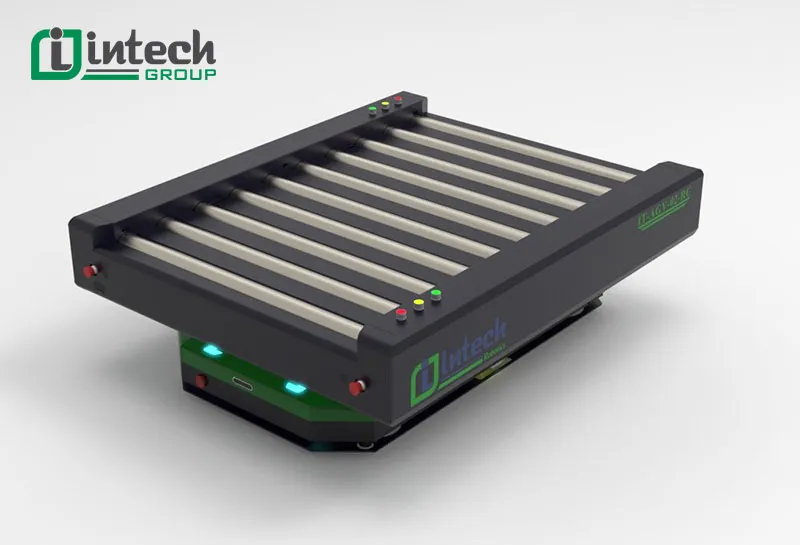
An AGV (Automated Guided Vehicle) is a self-driving robot that follows a predetermined route using various types of guidance technologies such as magnetic strips, lasers, or GPS. AGV robots are battery-powered and equipped with safety guards and various auxiliary mechanisms.
The main purpose of AGV Robots is to transport materials, products, pallets, boxes, etc. in smart warehouses, distribution centers (DCs) and manufacturing facilities using designated receiving and delivery procedures. It can also lift and load over long distances.
AGV autonomous robots provide a modern, economical and safe way for distribution and manufacturing operations to scale throughput with flexible automation instead of adding labor, physical space or bulky equipment.

As a general rule, AGV robots consist of five basic essential elements: positioning system, safety system, electrical system, motion system and vehicle controller.
In all cases, the movement and workflow of an AGV robot depends on the commands of a higher-level program, such as a warehouse management system (WMS). This software coordinates everything that happens in a logistics facility and synchronizes the tasks of the various automated systems operating in the warehouse.
The types and forms of AGVs also vary depending on the role they are required to perform. There are 3 main types of AGVs that are most commonly known:
1 - AGV trolley
Automated guided trolleys are the most basic type of AGV with minimal features. Guidance systems can range from simple systems like magnetic tape to complex, sensor-based guidance systems that use AI to navigate their environment. They can transport a wide variety of materials, from small parts to load-bearing pallets, and are commonly used in sorting, storage, and cross-docking applications.
2 - AGV Forklifts
Automated guided vehicles, or AGVs, are another commonly used type of AGV. They are designed to perform the same functions as a human-operated forklift (transporting pallets), but without the need for an operator.
3 - AGV Tow Vehicles
Automated guided vehicles, tow one or more non-motorized vehicles with a load behind them in a train-like formation. Sometimes referred to as driverless trains, the towed vehicles are powered by wheels. AGVs are often used to transport heavy goods over longer distances. They may have several stops along a defined path through a warehouse or factory.

AGV systems are used for tasks that are typically handled by forklifts, conveyor systems, or manual carts, moving large volumes of materials in a repetitive manner. AGV robots are often responsible for performing logistics operations such as distributing goods between different storage areas in a facility, loading and unloading goods in receiving and shipping areas, and other tasks. Since AGV robots can carry heavy loads, they are also used in manufacturing centers to move parts of various sizes to the assembly line. Here are some of their most common applications:
- Loading and unloading trucks:
AGV robots can perform the functions of a forklift or other type of conventional handling equipment. For example, these robots can automatically remove or load goods onto trucks.
- Product storage and retrieval:
AGV robots can place items in their respective storage locations and move goods to the order fulfillment area. These movements of goods facilitate fast, safe, and automated replenishment of goods to racks and picking stations for both products and operators.
- Connecting to the production center:
AGV robots can be configured to transport large, heavy, and bulky goods. This makes AGV mobile robots a suitable choice in warehouses located near production centers. The autonomous guided vehicles transport loads to assembly lines, especially in sectors such as the automotive and aerospace industries.
- Distributing supplies:
AGV robots don’t just move heavy goods; they also distribute goods at facilities with supply stations. Following a predetermined route, these autonomous vehicles streamline the replenishment of goods to various assembly stations, delivering goods in the exact quantities required.
AGV robots are used in all sorts of industries, from manufacturing to the food and beverage, pharmaceutical, and automotive industries. AGVs deliver the required raw materials consistently and reliably without human intervention, ensuring that production lines always have the materials they need without interruption.

When deciding whether AGVs are right for your company as you look to automate your operations, a common place to start is to consider the pros and cons of AGVs. To help you determine if they are right for you, here are some of the advantages of using AGVs.
1. Reduced Labor Costs
AGVs reduce labor costs in your operation in several ways: By replacing human workers with AGVs, a company pays a single cost for the equipment, an initial investment compared to the ongoing costs that would come with a new hire such as health care insurance, payroll taxes, raises, vacation time, etc.
2. Increased Safety
AGVs are programmed with safety in mind and as such are fully equipped with cameras, lasers, and other sensors that allow them to operate safely around the facility. In contrast, human-operated equipment, such as forklifts, do not have many built-in safety mechanisms and ultimately rely on human input. While there is always the possibility of human operators becoming distracted or fatigued, and therefore causing an accident, this is not a concern when using AGVs.
Additionally, AGVs can operate in conditions where humans cannot operate or in conditions where humans do not perform optimally, such as in extreme heat or cold or around hazardous materials.
All of this increased safety leads to reduced costs and reduced downtime, which can ultimately increase the profitability of many operations.
3. Increased Accuracy and Productivity
By replacing the human element with AGVs, you eliminate some of the possibilities for inaccurate workflows, ultimately reducing waste and increasing output, allowing your operations to become more productive and accurate. And while human workers are limited in the hours they can work, AGVs have the ability to operate 24/7.
In addition to the obvious improvements in accuracy and productivity, integrating AGVs with your warehouse control or warehouse management system can streamline processes like inventory and material ordering.
4. Modularity
As your operations expand, you can easily add additional AGVs as needed. This allows you to avoid a high initial investment because instead of purchasing 20 or 30 AGVs at once, you can start with one or two and slowly transition, eventually expanding your fleet to fully or mostly automated operation.
5. Less expensive than fixed automation systems
In many cases, AGVs perform the same tasks as fixed automation solutions such as conveyors. Fixed automation systems can be expensive to implement and often impact workflows during implementation, requiring time to put systems in place, and sometimes a facility cannot operate during implementation.
AGVs, on the other hand, are less expensive to implement and, more importantly, do not impact operations during implementation. This results in less downtime and increased productivity. Additionally, facilities will often need to adjust workflows and layouts to meet demand and increase flexibility. A fixed automation system, once implemented, is difficult and expensive to move. AGVs, on the other hand, can be easily reprogrammed to follow new paths.
AGVs have many advantages when used, but there are also some disadvantages you should be aware of:
1. Potentially High Initial Investment
AGVs increase the bottom line of an operation by reducing labor costs and increasing productivity, but it comes at a cost: the initial investment. Purchasing an AGV, in the short term, will likely be more expensive than hiring employees or using other equipment such as forklifts. Often, in the long term, the savings are fully realized. This initial investment can be burdensome for smaller operations that may not have ready access to capital.
2. Maintenance Costs
As with any piece of equipment, AGVs will require periodic maintenance and occasional repairs. And while AGVs will not be directly operated by employees, there will inevitably be some downtime as employees train and deploy the AGVs. This is not necessarily a “disadvantage,” but it should be taken into account that there is a potential for an occasional ongoing expense.
3. Not suitable for non-repetitive tasks
AGVs make the most sense in operations that deal with repetitive tasks because that is what they are programmed to do. If the tasks in your operation tend to be non-repetitive, they can be performed more quickly and efficiently by other equipment operators (such as forklifts).
4. Reduced operational flexibility
One of the benefits of having human workers is that sometimes operations require flexibility, such as the ability to switch between tasks. AGVs operate on pre-set systems and procedures, which can make it difficult to make rapid changes. A business model that tends to react to trends or is otherwise agile may not be best suited to AGVs.
The benefits of AGVs have created buzz and put them front and center in the minds of warehouse managers and supply chain executives who are considering automation. But the simple truth is that they are not right for all businesses.
If you are looking to automate your operations but are worried that AGVs will not meet your specific needs, there is good news: Warehouse automation comes in many forms and technologies that you can use to increase the efficiency and profitability of your operation.
Of these options, AMRs may be the best match for AGVs in terms of use and purpose.
Autonomous Mobile Robots (AMRs) are a newer breed of warehouse robots that are capable of performing the same basic task (moving inventory) as AGVs. While AGVs are large, bulky pieces of technology that navigate a facility largely along fixed, pre-set routes, AMRs rely on a complex suite of sensors and onboard maps that allow them to interpret their surroundings.
This key difference means that AMRs can often be used in a more flexible and intuitive way to:
AGVs can be incredibly useful tools that can increase efficiency and profitability in many order fulfillment operations, but they are not for everyone.
To determine whether they are right for you, you will need to weigh the benefits and drawbacks of using automated guided vehicles and decide whether they will complement or hinder your operations. Depending on the specifics of your operation, another type of automation technology (such as an autonomous mobile robot or AS/RS) may better meet your business needs.
Factors such as business cycle, operational goals, growth rate, and available capital will all influence the feasibility of implementing an automated guided vehicle.
See more:
What is an AGV?
An AGV (Automated Guided Vehicle) is a self-driving robot that follows a predetermined route using various types of guidance technologies such as magnetic strips, lasers, or GPS. AGV robots are battery-powered and equipped with safety guards and various auxiliary mechanisms.
The main purpose of AGV Robots is to transport materials, products, pallets, boxes, etc. in smart warehouses, distribution centers (DCs) and manufacturing facilities using designated receiving and delivery procedures. It can also lift and load over long distances.
AGV autonomous robots provide a modern, economical and safe way for distribution and manufacturing operations to scale throughput with flexible automation instead of adding labor, physical space or bulky equipment.
.webp "Robot tự hành agv")
How do AGV autonomous robots work?
As a general rule, AGV robots consist of five basic essential elements: positioning system, safety system, electrical system, motion system and vehicle controller.
- Navigation system: This is the part of the AGV robot that is responsible for receiving, processing information to follow a predetermined route or direction and controlling the vehicle. There are many types of navigation, including laser, wire, and magnetic, among others.
- Safety system: Every AGV robot has safety components that are appropriate for its function, ensuring that movements are performed in the safest way possible. An example of a safety system is a laser scanner, which stops the vehicle when there is an obstacle in its path.
- Power system: Autonomous guided robots have batteries that provide the energy needed to move. Each type of AGV robot will have a different type of battery and charging method depending on the needs of the warehouse or production center.
- Motion system: AGV robots integrate many components that allow the vehicle to move and perform tasks. This category includes everything from motors and wheels to masts and hydraulic systems used by the robot to lift loads.
- Vehicle Controller: AGV robots are guided by a programmable logic controller (PLC), which transmits information received from the software and facilitates the vehicle's autonomous movement.
In all cases, the movement and workflow of an AGV robot depends on the commands of a higher-level program, such as a warehouse management system (WMS). This software coordinates everything that happens in a logistics facility and synchronizes the tasks of the various automated systems operating in the warehouse.
What types of AGVs are there?
The types and forms of AGVs also vary depending on the role they are required to perform. There are 3 main types of AGVs that are most commonly known:
1 - AGV trolley
Automated guided trolleys are the most basic type of AGV with minimal features. Guidance systems can range from simple systems like magnetic tape to complex, sensor-based guidance systems that use AI to navigate their environment. They can transport a wide variety of materials, from small parts to load-bearing pallets, and are commonly used in sorting, storage, and cross-docking applications.
2 - AGV Forklifts
Automated guided vehicles, or AGVs, are another commonly used type of AGV. They are designed to perform the same functions as a human-operated forklift (transporting pallets), but without the need for an operator.
3 - AGV Tow Vehicles
Automated guided vehicles, tow one or more non-motorized vehicles with a load behind them in a train-like formation. Sometimes referred to as driverless trains, the towed vehicles are powered by wheels. AGVs are often used to transport heavy goods over longer distances. They may have several stops along a defined path through a warehouse or factory.
.webp "Robot tự hành kéo hàng tự động")
Applications of AGV Robots
AGV systems are used for tasks that are typically handled by forklifts, conveyor systems, or manual carts, moving large volumes of materials in a repetitive manner. AGV robots are often responsible for performing logistics operations such as distributing goods between different storage areas in a facility, loading and unloading goods in receiving and shipping areas, and other tasks. Since AGV robots can carry heavy loads, they are also used in manufacturing centers to move parts of various sizes to the assembly line. Here are some of their most common applications:
- Loading and unloading trucks:
AGV robots can perform the functions of a forklift or other type of conventional handling equipment. For example, these robots can automatically remove or load goods onto trucks.
- Product storage and retrieval:
AGV robots can place items in their respective storage locations and move goods to the order fulfillment area. These movements of goods facilitate fast, safe, and automated replenishment of goods to racks and picking stations for both products and operators.
- Connecting to the production center:
AGV robots can be configured to transport large, heavy, and bulky goods. This makes AGV mobile robots a suitable choice in warehouses located near production centers. The autonomous guided vehicles transport loads to assembly lines, especially in sectors such as the automotive and aerospace industries.
- Distributing supplies:
AGV robots don’t just move heavy goods; they also distribute goods at facilities with supply stations. Following a predetermined route, these autonomous vehicles streamline the replenishment of goods to various assembly stations, delivering goods in the exact quantities required.
AGV robots are used in all sorts of industries, from manufacturing to the food and beverage, pharmaceutical, and automotive industries. AGVs deliver the required raw materials consistently and reliably without human intervention, ensuring that production lines always have the materials they need without interruption.
Outstanding Advantages of AGVs
When deciding whether AGVs are right for your company as you look to automate your operations, a common place to start is to consider the pros and cons of AGVs. To help you determine if they are right for you, here are some of the advantages of using AGVs.
1. Reduced Labor Costs
AGVs reduce labor costs in your operation in several ways: By replacing human workers with AGVs, a company pays a single cost for the equipment, an initial investment compared to the ongoing costs that would come with a new hire such as health care insurance, payroll taxes, raises, vacation time, etc.
2. Increased Safety
AGVs are programmed with safety in mind and as such are fully equipped with cameras, lasers, and other sensors that allow them to operate safely around the facility. In contrast, human-operated equipment, such as forklifts, do not have many built-in safety mechanisms and ultimately rely on human input. While there is always the possibility of human operators becoming distracted or fatigued, and therefore causing an accident, this is not a concern when using AGVs.
Additionally, AGVs can operate in conditions where humans cannot operate or in conditions where humans do not perform optimally, such as in extreme heat or cold or around hazardous materials.
All of this increased safety leads to reduced costs and reduced downtime, which can ultimately increase the profitability of many operations.
3. Increased Accuracy and Productivity
By replacing the human element with AGVs, you eliminate some of the possibilities for inaccurate workflows, ultimately reducing waste and increasing output, allowing your operations to become more productive and accurate. And while human workers are limited in the hours they can work, AGVs have the ability to operate 24/7.
In addition to the obvious improvements in accuracy and productivity, integrating AGVs with your warehouse control or warehouse management system can streamline processes like inventory and material ordering.
4. Modularity
As your operations expand, you can easily add additional AGVs as needed. This allows you to avoid a high initial investment because instead of purchasing 20 or 30 AGVs at once, you can start with one or two and slowly transition, eventually expanding your fleet to fully or mostly automated operation.
5. Less expensive than fixed automation systems
In many cases, AGVs perform the same tasks as fixed automation solutions such as conveyors. Fixed automation systems can be expensive to implement and often impact workflows during implementation, requiring time to put systems in place, and sometimes a facility cannot operate during implementation.
AGVs, on the other hand, are less expensive to implement and, more importantly, do not impact operations during implementation. This results in less downtime and increased productivity. Additionally, facilities will often need to adjust workflows and layouts to meet demand and increase flexibility. A fixed automation system, once implemented, is difficult and expensive to move. AGVs, on the other hand, can be easily reprogrammed to follow new paths.
Disadvantages of AGVs to Be Aware of
AGVs have many advantages when used, but there are also some disadvantages you should be aware of:
1. Potentially High Initial Investment
AGVs increase the bottom line of an operation by reducing labor costs and increasing productivity, but it comes at a cost: the initial investment. Purchasing an AGV, in the short term, will likely be more expensive than hiring employees or using other equipment such as forklifts. Often, in the long term, the savings are fully realized. This initial investment can be burdensome for smaller operations that may not have ready access to capital.
2. Maintenance Costs
As with any piece of equipment, AGVs will require periodic maintenance and occasional repairs. And while AGVs will not be directly operated by employees, there will inevitably be some downtime as employees train and deploy the AGVs. This is not necessarily a “disadvantage,” but it should be taken into account that there is a potential for an occasional ongoing expense.
3. Not suitable for non-repetitive tasks
AGVs make the most sense in operations that deal with repetitive tasks because that is what they are programmed to do. If the tasks in your operation tend to be non-repetitive, they can be performed more quickly and efficiently by other equipment operators (such as forklifts).
4. Reduced operational flexibility
One of the benefits of having human workers is that sometimes operations require flexibility, such as the ability to switch between tasks. AGVs operate on pre-set systems and procedures, which can make it difficult to make rapid changes. A business model that tends to react to trends or is otherwise agile may not be best suited to AGVs.
Alternatives to AGVs
The benefits of AGVs have created buzz and put them front and center in the minds of warehouse managers and supply chain executives who are considering automation. But the simple truth is that they are not right for all businesses.
If you are looking to automate your operations but are worried that AGVs will not meet your specific needs, there is good news: Warehouse automation comes in many forms and technologies that you can use to increase the efficiency and profitability of your operation.
- Some potential alternatives to AGVs that you may want to consider include:
- Conveyor systems
- Automated storage and retrieval systems (AS/RS)
- Overhead cart conveyors
- Autonomous mobile robots (AMRs)
Of these options, AMRs may be the best match for AGVs in terms of use and purpose.
Autonomous Mobile Robots (AMRs) are a newer breed of warehouse robots that are capable of performing the same basic task (moving inventory) as AGVs. While AGVs are large, bulky pieces of technology that navigate a facility largely along fixed, pre-set routes, AMRs rely on a complex suite of sensors and onboard maps that allow them to interpret their surroundings.
This key difference means that AMRs can often be used in a more flexible and intuitive way to:
- Transport inventory and products between areas
- Assist in the order picking process
- Sort products and inventory
- Increase inventory visibility
Are AGVs Right for Your Business?
AGVs can be incredibly useful tools that can increase efficiency and profitability in many order fulfillment operations, but they are not for everyone.
To determine whether they are right for you, you will need to weigh the benefits and drawbacks of using automated guided vehicles and decide whether they will complement or hinder your operations. Depending on the specifics of your operation, another type of automation technology (such as an autonomous mobile robot or AS/RS) may better meet your business needs.
Factors such as business cycle, operational goals, growth rate, and available capital will all influence the feasibility of implementing an automated guided vehicle.
See more:
Những câu hỏi thường gặp


