


The Ultimate Guide to Choosing the Right Conveyor for Your Warehouse
Conveyor belts are an important part of automated production systems. They move parts and products securely through your entire warehouse. Automated conveyors are best suited for warehouses if you want to reduce human involvement.
Conveyor belts are an important part of automated production systems. They move parts and products securely through your entire warehouse. Automated conveyors are best suited for warehouses if you want to reduce human involvement.
Deciding on the right warehouse conveyor can be a daunting task as identifying, developing and purchasing ideal material handling system designs as conveyor systems varies from simple to very complex.
Is it relevant to the current situation in your inventory and ideal for adapting to future changes?
- Does it work safely?
- Is it reliable and requires only minimal maintenance?
- Is your energy efficient and your working environment?
- Is it cost effective in operation and within your budget?
You risk disrupting the productivity of your warehouse and distribution center by purchasing the wrong conveyor system, which can quickly affect productivity and efficiency and reduce your competitive edge. .

- Product dimensions:
Consider the length, width and height of the product before deciding on a conveyor system that meets these specifications.
- Product weight:
Consider the weight of the product when choosing your conveyor system. The weight of your products plays a huge role in sizing the motor for your conveyor as well as how many curves will be added.
- Product rate:
Production speeds are measured in sections with product lengths allowing you to determine the right conveyor speed needed in your workplace.
- Product Type:
Moving a wide variety of products is a decisive factor in choosing a conveyor type.
- Maintainability: Choose conveyors that are easy to maintain and are less likely to fail and halt productivity.
- Safety: Some conveyor types have built-in safety features while others need to take extra precautions to protect your employees.
- Energy Efficiency: Some conveyors consume less energy than others. Simply programming your conveyor and part of the system to shut down when not in use can lead to a reduction in your energy costs.
Deciding on the right warehouse conveyor can be a daunting task as identifying, developing and purchasing ideal material handling system designs as conveyor systems varies from simple to very complex.
Ask yourself 5 questions before deciding on your conveyor system:
Is it relevant to the current situation in your inventory and ideal for adapting to future changes?
- Does it work safely?
- Is it reliable and requires only minimal maintenance?
- Is your energy efficient and your working environment?
- Is it cost effective in operation and within your budget?
You risk disrupting the productivity of your warehouse and distribution center by purchasing the wrong conveyor system, which can quickly affect productivity and efficiency and reduce your competitive edge. .
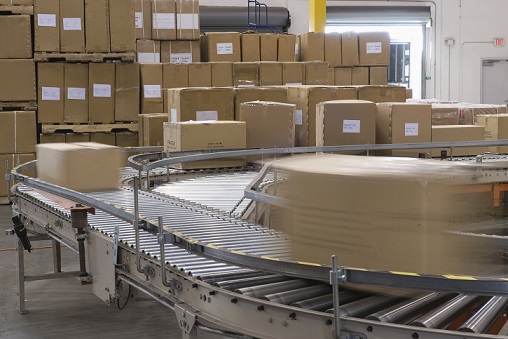
Consider 4 factors when deciding which conveyor system is best for you:
- Product dimensions:
Consider the length, width and height of the product before deciding on a conveyor system that meets these specifications.
- Product weight:
Consider the weight of the product when choosing your conveyor system. The weight of your products plays a huge role in sizing the motor for your conveyor as well as how many curves will be added.
- Product rate:
Production speeds are measured in sections with product lengths allowing you to determine the right conveyor speed needed in your workplace.
- Product Type:
Moving a wide variety of products is a decisive factor in choosing a conveyor type.
3 factors to consider when looking for a conveyor belt for your warehouse:
- Maintainability: Choose conveyors that are easy to maintain and are less likely to fail and halt productivity.
- Safety: Some conveyor types have built-in safety features while others need to take extra precautions to protect your employees.
- Energy Efficiency: Some conveyors consume less energy than others. Simply programming your conveyor and part of the system to shut down when not in use can lead to a reduction in your energy costs.


