


Summary of 4 industrial revolutions that changed the world
From 1760, when the First Industrial Revolution began, to today, we have witnessed an incredible evolution. The four industrial revolutions have not only changed the way things are produced, but have also shaped global society, economy, and culture.
We have witnessed a remarkable journey of progress and transformation in industrial development. This journey, spanning centuries, is a testament to human ingenuity and our relentless pursuit of progress. Let’s embark on a retrospective and prospective exploration of the major industrial revolutions that have and will reshape our world.
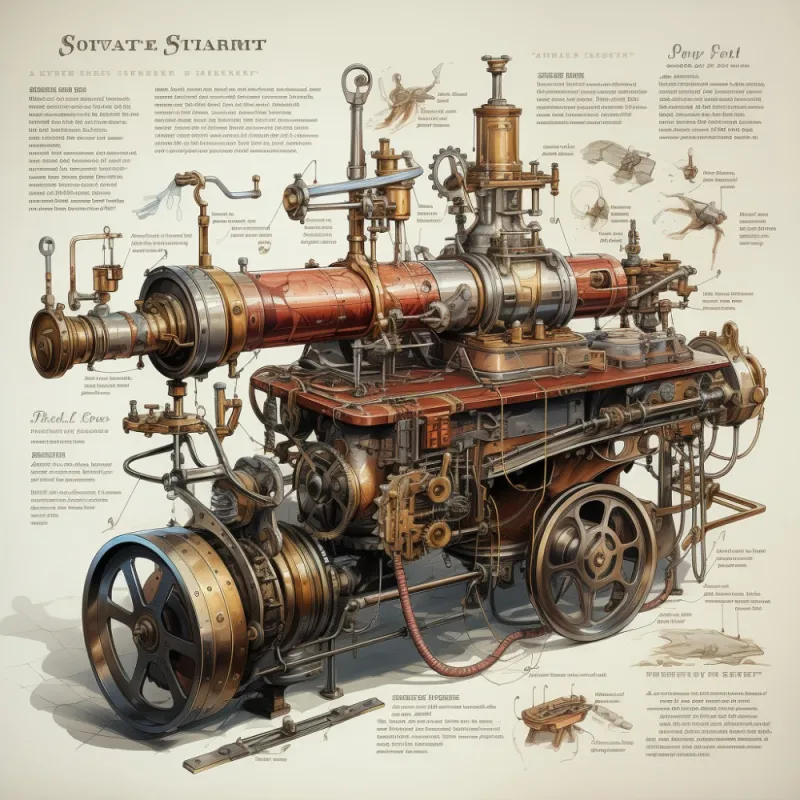
1. The First Industrial Revolution (IR 1.0)
- Time: Late 18th century (c. 1760-1840).
- Key technology: Use of water and steam power to mechanize production.
- Characteristics: Shift from manual labor to machines. Invention of the textile machine, steam engine (James Watt).
- Impact: The birth of the first factories. Increased productivity, urbanization, change from agricultural to industrial economy.
- Culture: Lifestyles changed from rural self-sufficiency to dependence on factories and wages.
- Environment: Pollution began due to dust from steam engines and coal mining.
It was not only an era of mechanical advancement but also a period of social transformation, reshaping the way we live, work and interact.
- Steam engines: James Watt, a pioneer in the field of steam engines, is known for his important innovations that greatly improved the efficiency and applicability of steam engines in many different industries.
- Textile machinery: Innovations such as the spinning machine and the power loom revolutionized textile production, greatly increasing output.
- Iron smelting: Improved methods of iron smelting, such as the use of coke, led to an increase in the production of iron, which was essential for machinery and construction.
- Railways: The development of railways helped transport goods and people faster, revolutionizing logistics and trade.
- Canals: The construction of canals reduced the cost of transporting heavy goods, promoting trade and industry.
2. The Second Industrial Revolution (CMCN 2.0)
- Time: Late 19th century to early 20th century (around 1870-1914).
- Main technology: Electric power and mass production lines.
- Characteristics: Development of electricity (Thomas Edison, Nikola Tesla) and internal combustion engines. Assembly line production (Henry Ford with the automobile).
- Impact: Increased scale of production, reduced product costs. Development of transportation (cars, electric trains).
Example: The Ford Model T automobile assembly line.
This electrification revolution not only brightened our homes; it also sparked efficiency and scalability in manufacturing.
- Electricity Generation and Distribution: The advent of electricity transformed industries by providing a more efficient and flexible source of energy.
- Assembly Line: Henry Ford pioneered this method in the automobile industry, greatly increasing production efficiency and reducing costs.
- Telegraph and Telephone: These technologies connected distant locations, facilitating business and personal communication.
- Electric Light: The incandescent light bulb, invented by Thomas Edison, extended working hours and improved productivity.
- Chemical Processes: The development of synthetic dyes and fertilizers marked significant advances in the chemical industry.

3. The Third Industrial Revolution (Industry 3.0)
- Time: Mid-20th century (around 1960-1970).
- Key technologies: Automation through electronics, computers, and PLCs (Programmable Logic Controllers).
- Characteristics: Using transistors, microchips, and software to automate production. Industrial robots begin to appear.
- Impact: Reducing manual labor, increasing precision and efficiency. Development of IT, telecommunications (early Internet).
Examples: CNC machines and robots in the production of electronic components.
This digital revolution is more than just a technological leap; it is a paradigm shift in the way we process information, operate machines, and envision the future of manufacturing.
- Personal computers: Revolutionizing the way businesses and individuals process information and perform tasks.
- Programmable Logic Controllers (PLCs): These devices automate industrial processes, increasing efficiency and reducing human error.
- Internet: Transforming communication, information sharing and commerce, connecting the world in unprecedented ways.
- Robots in manufacturing: Robots are starting to be widely used in automobile and electronics manufacturing, improving precision and productivity.
- Digital telecommunications: Innovations such as mobile phones and fiber optics have revolutionized personal and business communications.

4. The Fourth Industrial Revolution (Industry 4.0)
- Time: Started in the early 21st century (around 2010) and is ongoing.
- Key technologies: Combining physics, digitalization and biology (IoT, AI, Big Data, Blockchain, smart robots).
- Characteristics: Smart factory with Internet of Things (IoT). High-level automation, personalized production, real-time data.
- Impact: Changing the way we manufacture, do business, and interact socially. Increasing efficiency, reducing costs, but posing challenges for jobs and security.
Examples: Tesla's automated manufacturing system, AI applications in Amazon warehouse management.
Industry 4.0 is redefining the boundaries of manufacturing, blurring the lines between the physical and virtual worlds.
- Internet of Things (IoT): Devices are connected to the internet to share data, optimize processes, and improve real-time decision making.
- Integration with IoT: Nanotechnology plays a key role in enhancing sensors and devices in the Internet of Things (IoT), making them more efficient, responsive, and flexible.
- Artificial intelligence and machine learning: These technologies enable predictive maintenance, advanced analytics, and smarter manufacturing processes.
- 3D Printing: Enables rapid prototyping, customization, and on-demand manufacturing, impacting a wide range of industries from healthcare to aerospace.
- Advances in cybersecurity: As more processes become digital, robust cybersecurity measures are critical to protecting data and systems.
- Smart factories: Factories where machines and equipment can improve processes through automation and self-optimization.
- Advanced materials: The development of new materials with unique properties (such as strength, light weight, or conductivity) at the nanoscale is critical to many manufacturing, electronics, and energy storage processes.
- Healthcare innovation: Nanomedicine is revolutionizing healthcare, including targeted drug delivery systems and nanorobotics for medical diagnosis and treatment.

Comparing the 4 Industrial Revolutions
Below is a detailed comparison table between the 4 industrial revolutions (CMCN) based on key criteria such as time, technology, economic, social, and environmental impact. This comparison helps to clarify the differences and evolution through each stage.
- Comparison table of 4 industrial revolutions
| Criteria | Industrial Revolution 1.0 | Industrial Revolution 2.0 | Industrial Revolution 3.0 | Industrial Revolution 4.0 |
| Time | 1760-1840 | 1870-1914 | 1960-1970 | 2010-present |
| Main technology | Steam, water power, mechanical machinery | Electricity, internal combustion engines, production lines | Electronics, computers, PLCs, robots | IoT, AI, Big Data, Blockchain, 3D printing |
| Origin | UK | UK, USA, Germany | USA, Japan, Western Europe | Germany (Industry 4.0), global |
| Typical inventions | Spinning machine, steam engine | Light bulb, car, AC electricity | Transistor, microchip, Internet | Smart factory, AI robot |
| Production method | Mechanization, manual factory | Mass production, assembly line | Automation, precision production | Smart manufacturing, personalization |
| Main energy | Coal, water | Electricity, oil | Electricity, nuclear | Electricity, renewable energy |
- Economic impact of the 4 industrial revolutions
| Criteria | Industrial Revolution 1.0 | Industrial Revolution 2.0 | Industrial Revolution 3.0 | Industrial Revolution 4.0 |
| Economy | Shift from agriculture to industry | Mass production, globalization | Knowledge economy, automation | Digital economy, flexible production |
| Productivity | Increase thanks to mechanization | Strong increase thanks to assembly lines | High increase thanks to automation | Optimization thanks to real-time data |
| Trade | Domestic, early export | Early globalization | Strong globalization | E-commerce, digital supply chain |
| Featured industries | Textiles, mining | Steel, automobiles, chemicals | Electronics, IT, aviation | Technology, digital services, healthcare |
- Social impact association
| Criteria | Industrial Revolution 1.0 | Industrial Revolution 2.0 | Industrial Revolution 3.0 | Industrial Revolution 4.0 |
| Labor | Factory workers, manual workers | Assembly workers, unions | Technical workers, partial unemployment | Digital workers, high skills, high unemployment |
| Living standards | Low, poor working conditions | Improved by electricity, transportation | Strong growth, middle class | High but increasing inequality |
| Education | Not universal, unskilled workers | Basic universal, technical | University, vocational development | Digital skills, lifelong learning |
| Urbanization | Started, urban development | Strong growth, big cities | Stable, suburban development | Smart city |
- Environmental impact
| Criteria | Industrial Revolution 1.0 | Industrial Revolution 2.0 | Industrial Revolution 3.0 | Industrial Revolution 4.0 |
| Pollution | Coal smoke, primitive pollution | Heavy air and water pollution | Major industrial pollution | Electronic waste, but there are green solutions |
| Resources | Coal and wood mining | Petroleum, metals | Fossil fuels | Renewable, resource optimization |
| Awareness | Not interested | Little attention | Starting a green movement | Green, sustainable technology |
- Main differences of the 4 industrial revolutions
- Industrial Revolution 1.0: Focus on mechanization, conversion from manual to machine, impact mainly within the national scope.
- Industrial Revolution 2.0: Expanding production scale, applying electricity and assembly lines, influencing primitive globalization.
- Industrial Revolution 3.0: Shift to automation and digitalization, changing labor structures and consumer culture.
- Industry 4.0: Connecting all things, making production and life smart, posing great challenges to society and the environment.
Conclusion: The achievements of the 4 industrial revolutions that changed the world
This is a summary of the 4 industrial revolutions and these are not individual chapters but a continuous story of innovation and transformation. They reflect our journey through different eras of production and manufacturing, driving economic growth, increased productivity and profound social changes. As we move into the future with Industry 5.0, we are on the threshold of a new era that promises to further revolutionize the way we produce goods and services, with sustainability, personalization and collaboration between humans and machines at its core.
Những câu hỏi thường gặp


