


Smart Warehouse Setup: Things to Consider for Warehouse Layout Setup
The process of building a smart warehouse to transform operations can be complex, but it starts with defining goals and examining your own warehouse operations.
There’s nothing better than starting with a blank slate. Signing your first warehouse lease presents the opportunity to build your retail fulfillment engine from scratch. It’s an exciting step toward growing your business, but now comes the hard part. Just like furnishing a new home, leasing a warehouse takes time and planning to maximize the space to meet your logistics needs.
Setting up a warehouse is more than just stocking shelves with ecommerce inventory. The warehouse should be designed to optimize storage and streamline the fulfillment process.
Investing in a warehouse is a big undertaking, involving supply chain planning, budgeting, financing, and implementing internal fulfillment. Here’s an overview of what warehousing entails:
Once you’ve found the right warehouse, planning and designing the layout is a critical first step because it will impact the efficiency of your supply chain.

As you begin to build the right warehouse layout, you’ll want to focus on functionality and efficiency. You’ll want to think beyond how you’ll fit all of your inventory into the space available and consider the different ways you can optimize space to reduce costs and improve productivity. Before you start designing your warehouse layout, here are four key processes to keep in mind.
Poor warehouse receiving processes can lead to inventory control issues and high operating costs. As soon as you receive new inventory, your staff should be prepared to inspect each truckload and shipment, including quantity, seal integrity, and product codes to ensure that what’s in the box matches what you ordered and expected.
Depending on the size and volume, handling inventory may require heavy lifting and equipment like forklifts and pallet jacks. Depending on the size, weight, and type of product you sell, inventory may be stored on pallets, shelves, or bins.
Once you receive your inventory, you’ll need a system to keep track of what’s available for sale. Manually tracking inventory will only get you so far, and as monthly order volumes increase, it will soon become inefficient, not to mention costing you money.
The ability to track inventory in real time is a critical part of the ecommerce supply chain and is crucial for ecommerce brands looking to scale. This can be done by implementing inventory management software that provides a real-time view of your current inventory levels to ensure you have enough stock to meet demand and replenish inventory accordingly. Investing in the right technology for inventory management will empower your warehouse and set your team up for success.
Warehouse picking requires proper warehouse setup and layout design to make the process as smooth, accurate, and efficient as possible. As you think about possible ways to design your picking process, consider the following:
How your picking team operates will determine how quickly items are picked without compromising accuracy.
You and your team are responsible for loading trucks and ensuring that all orders are picked, packed, and shipped correctly as they leave the warehouse. Make sure you have enough space in your warehouse to accommodate a large number of orders being loaded at once.
You also have the option of choosing between parenting with large domestic and international carriers, regional parcel carriers, or a combination of all. It all depends on where your warehouse is located and your customers. Once you choose the right carrier to work with, you can negotiate shipping rates and schedule pickup times.
Once the order has arrived at the carrier, you can send tracking to share updates with your customers so they can be notified when it will be delivered.

How you design your warehouse layout depends on your business. For example, storing furniture requires a different storage layout plan than storing small, delicate jewelry with multiple SKUs.
However, across the industry, there are warehouse layout design best practices to keep in mind (although your layout will need to change over time as you grow).
When brainstorming your warehouse layout, you’ll need to map out the internal workflows of your warehouse and how each process will connect to the others. And you’ll need to plan around the dock doors where shippers will drop off and pick up.
From receiving inventory to arranging items on racks in the warehouse, to picking and packing items, to preparing orders for shipping, outlining the ideal workspaces will maximize efficiency, keep the warehouse organized, and increase productivity. Don’t forget to consider ways to mitigate any issues with the overall health and safety of your team.
What are the essential workstations you need? Do you have enough space in your warehouse layout for all of your employees to work comfortably? Typically, creating a one-way workflow is the most efficient way to set up warehouse workstations. A simple one-way flow helps ensure safety and eliminates bottlenecks in the warehouse.
Once you’ve determined how to set up different workstations, you can create pathways with signage or floor tape to provide clear guidance to your employees.
Warehouse best practices include choosing the right inventory storage system that will optimize your picking, packing, and shipping processes to ensure order accuracy, efficiency, and speed.
Reorganizing routes or areas, or even an entire warehouse, can seem like a daunting and time-consuming project. You’ll need to determine the best way to store inventory to optimize shipping costs, move large amounts of inventory to different locations, and ensure this is done correctly so that there are no issues during picking. To optimize your storage and warehouse processes, make sure to learn how warehouse slotting works, so you can organize your warehouse in a functional and efficient manner.
Using a warehouse management system (WMS) can lead to lower error rates, improved overall warehouse performance, and more timely inventory replenishment. While a WMS won’t directly impact your warehouse layout design, it will impact how you arrange your equipment and workstations.
Warehouse automation is an essential part of supply chain optimization, as it reduces the time, effort, and errors caused by manual, variable tasks.
Planning your picking process in advance will help you get your warehouse up and running smoothly. But it’s important to note that an efficient warehouse will continually need to improve its picking and packing processes to encourage high order accuracy — especially as your business grows.
Optimizing your warehouse picking process and/or implementing order picking software are two of the most effective ways to optimize your supply chain. Depending on the size of your warehouse, the number and types of products in it, and the total number of employees, one picking strategy may be more suitable for you than another.
Here are some common warehouse picking strategies you can implement:
- Batch Picking
Batch picking involves working on the same order in large quantities or batches at the same time in succession, rather than one at a time or by different people between different orders. This picking strategy is ideal for fulfilling multiple similar orders using the same SKU.
- Zone Picking
Zone picking involves assigning a picker to a specific area of the warehouse and picking only one order at a time in that area. If an order requires products from multiple areas, the order is typically routed via conveyor belt.
- Batch Picking
Batch picking is a combination of batch picking and zone picking, where the picker stays in one area but picks multiple orders at the same time. This strategy works best for warehouses with a large number of SKUs.
- Loose Picking
Flat picking is when a picker works on one order at a time as each order is placed. The same picker retrieves all the SKUs on the order and can process orders across the facility. This method is best for small businesses with a low number of SKUs and/or small warehouses or storage facilities.
No matter which picking strategy you decide to implement, the goal is to increase team productivity and maintain high order accuracy rates as your business grows.
It’s important to talk to your employees and get their feedback and make any changes that will help their day-to-day work. Ask your employees to review your warehouse layout design and any suggestions they can think of to improve it.
Your picking team will understand your current warehouse layout better than anyone else because they’re constantly moving around the entire space. Be sure to work with them to identify opportunities to create better fulfillment processes that will eliminate headaches, confusion, and human error throughout the entire process.

Planning and designing a warehouse is a huge undertaking. To help you get started, here is a simple warehouse layout design checklist. Consider the following questions to help you make better decisions when planning your ideal warehouse layout.
- Is your design optimized for your warehouse workflow?
How will you reduce inefficiencies, such as long walks between each picked order? What picking strategy will you implement? Decide how you will create efficient workflows before setting up workflows, capacity zones, inventory storage areas, and equipment storage.
- Does your design take into account equipment space?
Can forklifts travel a safe distance along marked routes on the ground? What about people? What type of equipment will you need to pick and pack items off your shelves? Where will the equipment be stored so it is easily accessible? For example, if you use one piece of equipment after another, but both are stored at opposite ends, this can cause inefficiencies and slow down processes.
- Does your design have room for growth?
How are you using space both vertically and horizontally? Are you at 100% capacity? Will you need to rearrange over time? Make sure to plan for future growth to avoid having to recreate your entire warehouse design from scratch; use digital twin technology so that as you grow, your layout and processes will scale.
- Does your design allow employees to move freely and unhindered?
Can your team move freely? Is the space designed to minimize safety risks? Make sure to create safe productivity zones for your employees to move around the warehouse efficiently. Plan ahead to avoid unnecessary congestion or overcrowding. This will also help eliminate errors during implementation.

The cost of installing a smart warehouse will vary depending on your automation needs. And when it comes to evaluating those needs and finding the right technology, you should hire a professional to advise you. However, there are some general statistics on the cost of automating your warehouse.
But these are just estimates. Every warehouse is unique with different needs, which means the price to automate your warehouse operations will be specific to you.
Warehouse automation may have a high upfront price, but these processes bring your facility into the future and allow you to compete faster and more accurately than other warehouse processes that do not have automation built into them. And you will see many cost savings in both labor and space that come with automating your warehouse. However, the transition to an automated facility is not something to be taken lightly, it must be a deliberate strategy with a plan that can take months or even years to execute.
See more:
Setting up and designing your warehouse layout
Setting up a warehouse is more than just stocking shelves with ecommerce inventory. The warehouse should be designed to optimize storage and streamline the fulfillment process.
Investing in a warehouse is a big undertaking, involving supply chain planning, budgeting, financing, and implementing internal fulfillment. Here’s an overview of what warehousing entails:
- Finding the warehouse space that meets your needs, from loading docks to optimal storage space
- Optimizing space to minimize costs, manage inventory, and fulfill orders efficiently
- Procuring forklifts, conveyors, and other equipment
- Keeping inventory secure and conducting inventory audits when necessary
- Paying taxes, utilities, office supplies, internet, and other administrative costs
- Implementing technology to automate inventory tracking, fulfillment, and shipping
- Recruiting, training, and managing employees to meet order demands
- Complying with regulations and obtaining the appropriate licenses and certifications
Once you’ve found the right warehouse, planning and designing the layout is a critical first step because it will impact the efficiency of your supply chain.
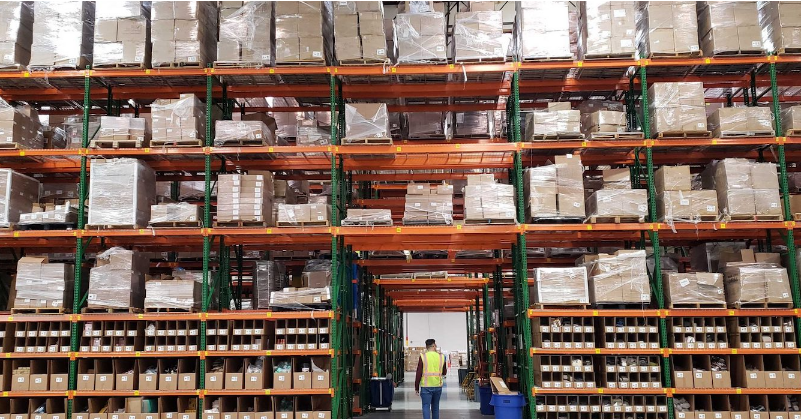
4 Processes to keep in mind when designing your warehouse
As you begin to build the right warehouse layout, you’ll want to focus on functionality and efficiency. You’ll want to think beyond how you’ll fit all of your inventory into the space available and consider the different ways you can optimize space to reduce costs and improve productivity. Before you start designing your warehouse layout, here are four key processes to keep in mind.
1. Receiving and Storing
Poor warehouse receiving processes can lead to inventory control issues and high operating costs. As soon as you receive new inventory, your staff should be prepared to inspect each truckload and shipment, including quantity, seal integrity, and product codes to ensure that what’s in the box matches what you ordered and expected.
Depending on the size and volume, handling inventory may require heavy lifting and equipment like forklifts and pallet jacks. Depending on the size, weight, and type of product you sell, inventory may be stored on pallets, shelves, or bins.
2. Track Inventory
Once you receive your inventory, you’ll need a system to keep track of what’s available for sale. Manually tracking inventory will only get you so far, and as monthly order volumes increase, it will soon become inefficient, not to mention costing you money.
The ability to track inventory in real time is a critical part of the ecommerce supply chain and is crucial for ecommerce brands looking to scale. This can be done by implementing inventory management software that provides a real-time view of your current inventory levels to ensure you have enough stock to meet demand and replenish inventory accordingly. Investing in the right technology for inventory management will empower your warehouse and set your team up for success.
3. Warehouse Picking
Warehouse picking requires proper warehouse setup and layout design to make the process as smooth, accurate, and efficient as possible. As you think about possible ways to design your picking process, consider the following:
- How will you create and assign pick lists?
- How far will the pick team need to walk to pick items?
- How will the pickers know where items are?
- Will it be batch picking?
How your picking team operates will determine how quickly items are picked without compromising accuracy.
4. Shipping Process
You and your team are responsible for loading trucks and ensuring that all orders are picked, packed, and shipped correctly as they leave the warehouse. Make sure you have enough space in your warehouse to accommodate a large number of orders being loaded at once.
You also have the option of choosing between parenting with large domestic and international carriers, regional parcel carriers, or a combination of all. It all depends on where your warehouse is located and your customers. Once you choose the right carrier to work with, you can negotiate shipping rates and schedule pickup times.
Once the order has arrived at the carrier, you can send tracking to share updates with your customers so they can be notified when it will be delivered.
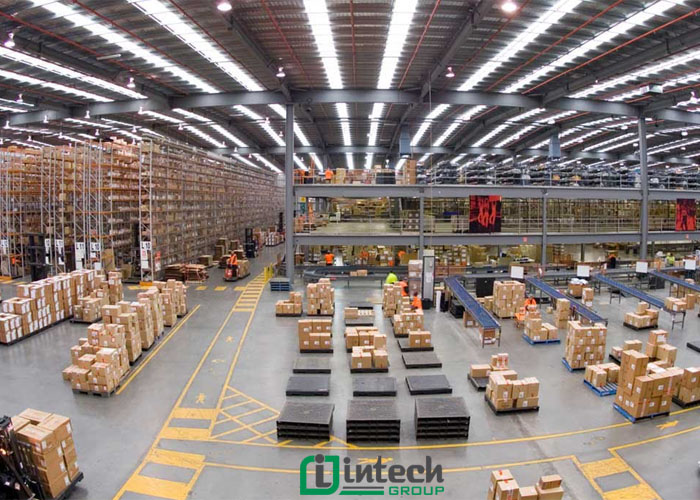
6 Ways to design the best warehouse layout
How you design your warehouse layout depends on your business. For example, storing furniture requires a different storage layout plan than storing small, delicate jewelry with multiple SKUs.
However, across the industry, there are warehouse layout design best practices to keep in mind (although your layout will need to change over time as you grow).
1. Outline the Warehouse Workflow
When brainstorming your warehouse layout, you’ll need to map out the internal workflows of your warehouse and how each process will connect to the others. And you’ll need to plan around the dock doors where shippers will drop off and pick up.
From receiving inventory to arranging items on racks in the warehouse, to picking and packing items, to preparing orders for shipping, outlining the ideal workspaces will maximize efficiency, keep the warehouse organized, and increase productivity. Don’t forget to consider ways to mitigate any issues with the overall health and safety of your team.
2. Identify Warehouse Workstations
What are the essential workstations you need? Do you have enough space in your warehouse layout for all of your employees to work comfortably? Typically, creating a one-way workflow is the most efficient way to set up warehouse workstations. A simple one-way flow helps ensure safety and eliminates bottlenecks in the warehouse.
Once you’ve determined how to set up different workstations, you can create pathways with signage or floor tape to provide clear guidance to your employees.
3. Optimize for Storage
Warehouse best practices include choosing the right inventory storage system that will optimize your picking, packing, and shipping processes to ensure order accuracy, efficiency, and speed.
Reorganizing routes or areas, or even an entire warehouse, can seem like a daunting and time-consuming project. You’ll need to determine the best way to store inventory to optimize shipping costs, move large amounts of inventory to different locations, and ensure this is done correctly so that there are no issues during picking. To optimize your storage and warehouse processes, make sure to learn how warehouse slotting works, so you can organize your warehouse in a functional and efficient manner.
4. Implement a warehouse management system
Using a warehouse management system (WMS) can lead to lower error rates, improved overall warehouse performance, and more timely inventory replenishment. While a WMS won’t directly impact your warehouse layout design, it will impact how you arrange your equipment and workstations.
Warehouse automation is an essential part of supply chain optimization, as it reduces the time, effort, and errors caused by manual, variable tasks.
5. Adjust Picking and Packing Areas
Planning your picking process in advance will help you get your warehouse up and running smoothly. But it’s important to note that an efficient warehouse will continually need to improve its picking and packing processes to encourage high order accuracy — especially as your business grows.
Optimizing your warehouse picking process and/or implementing order picking software are two of the most effective ways to optimize your supply chain. Depending on the size of your warehouse, the number and types of products in it, and the total number of employees, one picking strategy may be more suitable for you than another.
Here are some common warehouse picking strategies you can implement:
- Batch Picking
Batch picking involves working on the same order in large quantities or batches at the same time in succession, rather than one at a time or by different people between different orders. This picking strategy is ideal for fulfilling multiple similar orders using the same SKU.
- Zone Picking
Zone picking involves assigning a picker to a specific area of the warehouse and picking only one order at a time in that area. If an order requires products from multiple areas, the order is typically routed via conveyor belt.
- Batch Picking
Batch picking is a combination of batch picking and zone picking, where the picker stays in one area but picks multiple orders at the same time. This strategy works best for warehouses with a large number of SKUs.
- Loose Picking
Flat picking is when a picker works on one order at a time as each order is placed. The same picker retrieves all the SKUs on the order and can process orders across the facility. This method is best for small businesses with a low number of SKUs and/or small warehouses or storage facilities.
No matter which picking strategy you decide to implement, the goal is to increase team productivity and maintain high order accuracy rates as your business grows.
6. Gather Employee Feedback
It’s important to talk to your employees and get their feedback and make any changes that will help their day-to-day work. Ask your employees to review your warehouse layout design and any suggestions they can think of to improve it.
Your picking team will understand your current warehouse layout better than anyone else because they’re constantly moving around the entire space. Be sure to work with them to identify opportunities to create better fulfillment processes that will eliminate headaches, confusion, and human error throughout the entire process.
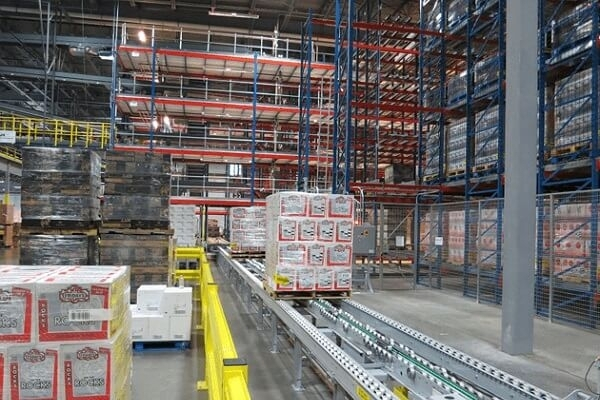
Warehouse setup design checklist
Planning and designing a warehouse is a huge undertaking. To help you get started, here is a simple warehouse layout design checklist. Consider the following questions to help you make better decisions when planning your ideal warehouse layout.
- Is your design optimized for your warehouse workflow?
How will you reduce inefficiencies, such as long walks between each picked order? What picking strategy will you implement? Decide how you will create efficient workflows before setting up workflows, capacity zones, inventory storage areas, and equipment storage.
- Does your design take into account equipment space?
Can forklifts travel a safe distance along marked routes on the ground? What about people? What type of equipment will you need to pick and pack items off your shelves? Where will the equipment be stored so it is easily accessible? For example, if you use one piece of equipment after another, but both are stored at opposite ends, this can cause inefficiencies and slow down processes.
- Does your design have room for growth?
How are you using space both vertically and horizontally? Are you at 100% capacity? Will you need to rearrange over time? Make sure to plan for future growth to avoid having to recreate your entire warehouse design from scratch; use digital twin technology so that as you grow, your layout and processes will scale.
- Does your design allow employees to move freely and unhindered?
Can your team move freely? Is the space designed to minimize safety risks? Make sure to create safe productivity zones for your employees to move around the warehouse efficiently. Plan ahead to avoid unnecessary congestion or overcrowding. This will also help eliminate errors during implementation.
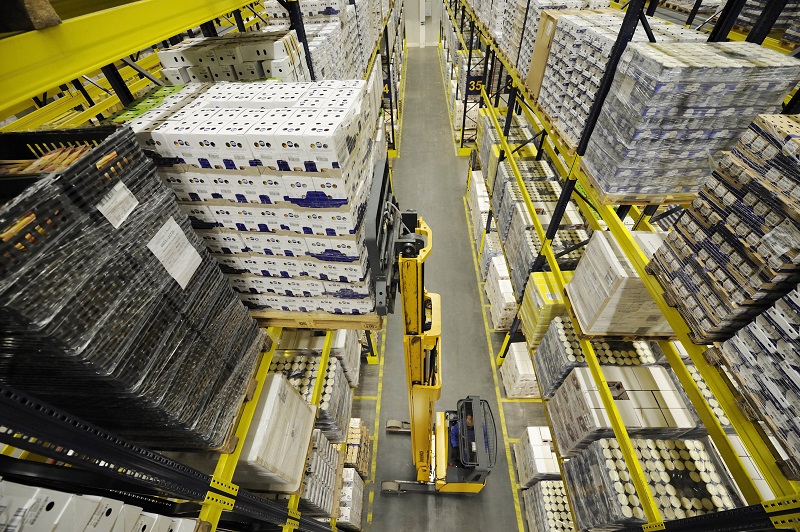
How much does it cost to install a Smart Warehouse?
The cost of installing a smart warehouse will vary depending on your automation needs. And when it comes to evaluating those needs and finding the right technology, you should hire a professional to advise you. However, there are some general statistics on the cost of automating your warehouse.
- If you want a system that focuses on improving picking, you’ll likely find costs in the $500,000 to $1 million range
- When looking at a mechanized operations system, you’ll find costs in the $1 million to $5 million range, and some enterprise systems can even go as high as $15 million
- If you want to see an unmanned “dark warehouse,” you can expect to pay around $25 million
But these are just estimates. Every warehouse is unique with different needs, which means the price to automate your warehouse operations will be specific to you.
Conclusion
Warehouse automation may have a high upfront price, but these processes bring your facility into the future and allow you to compete faster and more accurately than other warehouse processes that do not have automation built into them. And you will see many cost savings in both labor and space that come with automating your warehouse. However, the transition to an automated facility is not something to be taken lightly, it must be a deliberate strategy with a plan that can take months or even years to execute.
See more:
Những câu hỏi thường gặp


